Author Archives: Konica Minolta

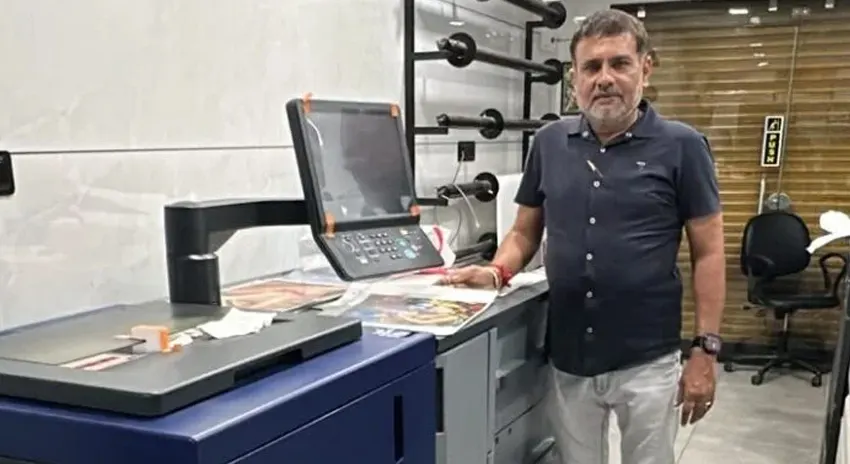
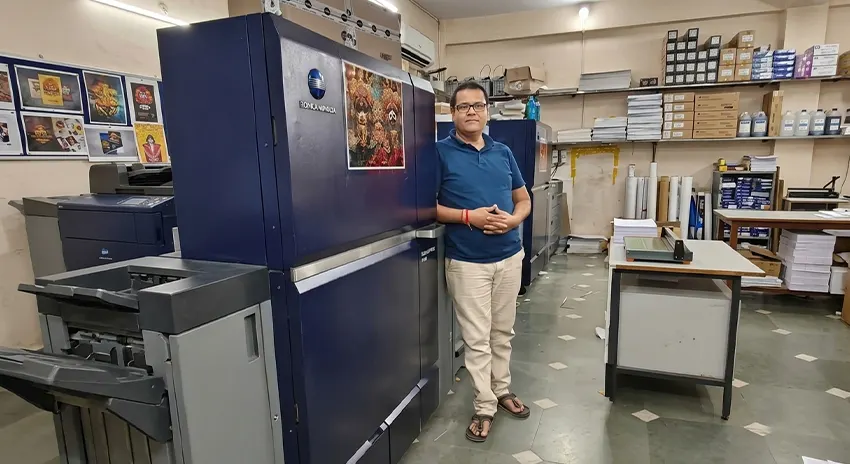
Anurag Printers installs an AccurioPress C7090 Enhanced from Konica Minolta

June 20, 2026

Anurag Printers installs an AccurioPress

Increased production capacity, improved operational efficiency, and opportunity to cater to a broader range of customers with the new press.

Established in 1981 by Mr. Vimal Arora, Anurag Printers has built a legacy of delivering quality printing solutions while continuously evolving with industry advancements. What began as a traditional letterpress printing operation has grown into a diversified business offering digital printing, flex printing, and signage solutions. Since 2001, Siddharth Arora’s active involvement has played a significant role in driving the company’s growth, strengthening its technological capabilities, and expanding its reach across a diverse range of clients and industries.

Mr. Vimal Arora, Founder and Owner of Anurag Printers, established the company and has played a pivotal role in shaping its growth and evolution over the years. Siddharth Arora is responsible for managing core business operations, development, and functioning, helping direct the company’s continued progress and success.

“We serve clients across a broad range of industries, with notable clients from the banking,  healthcare, pharmaceutical, and education sectors,” says Vimal Arora. “Alongside these sectors, we work with a wide range of B2B clients, delivering tailored printing and signage solutions designed to meet their specific operational and branding needs,” he adds.

They have recently invested in a Konica Minolta AccurioPress C7090 Enhanced. Speaking about the new machine, Siddharth Arora says, “Our previous experience with Konica Minolta machines gave us confidence in the quality and operational efficiency of their technology. We have chosen the C7090 Enhanced because of Konica Minolta’s strong reputation for reliability and consistent machine performance. This investment further strengthened our production capabilities and positioned us to better meet changing customer expectations.”

Anurag Printers’ team comprises approximately 14 skilled professionals managing production, design, and operational functions.

“Konica Minolta supported us throughout the installation of the machine and provided practical training to our team to ensure a seamless transition. In addition, their robust after-sales support network, backed by skilled service engineers and the easy availability of spare parts, helps ensure smooth operations with minimal production interruptions,” continues Siddharth.

Along with the Konica Minolta AccurioPress C7090 Enhanced, Anurag Printers has also invested in a 512i machine to further strengthen its flex printing capabilities. Our current infrastructure also includes eco-solvent printers, hot and cold lamination machines, custom sticker cutting systems, and hydraulic cutting machines, enabling us to handle a wide range of printing and finishing requirements in-house.

“We foresee achieving our return on investment within a timeframe of approximately 2 to 3 years,” declares a confident Vimal. “This outlook is based on the increased production capacity, improved operational efficiency, and the opportunity to cater to a broader range of customers through expanded service offerings,” he confirms.

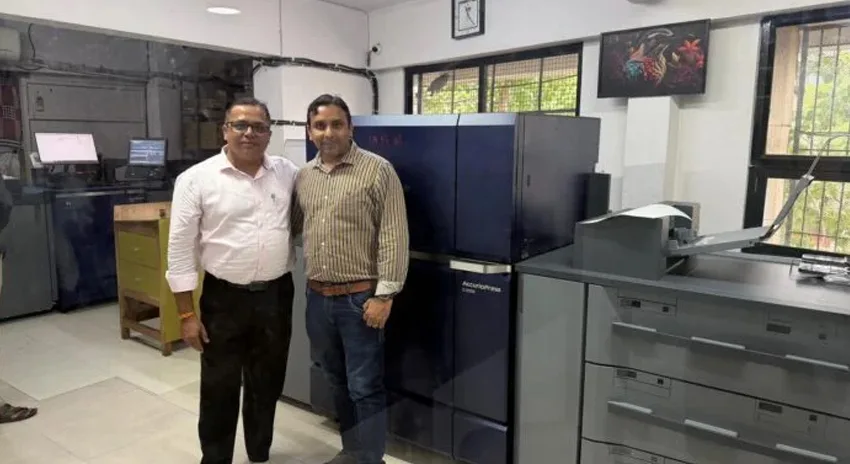
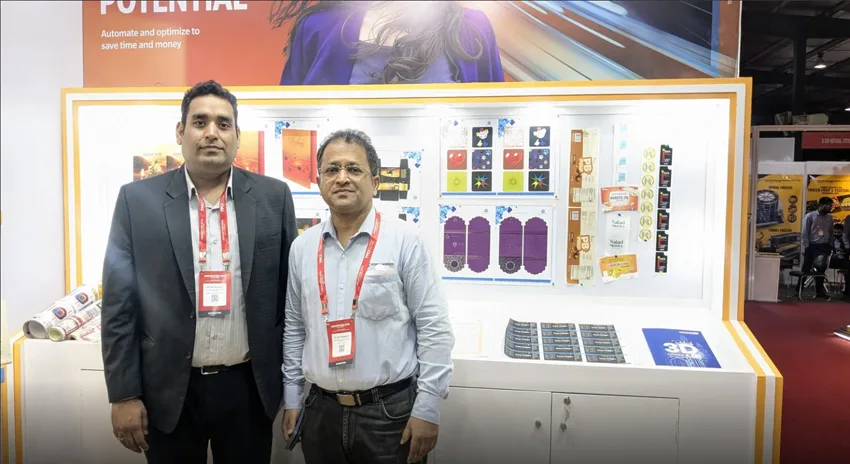
Ashok Digital installs Konica Minolta AccurioShine 3600 and AccurioShine 101

June 16, 2026

Ashok Digital installs Konica Minolta

Kolkata based aims premium print enhancements with these new machine additions.

Kolkata-based Ashok Digital recently has added AccurioShine 3600 and AccurioShine 101 fromm Konica Minolta to its production setup. The investment was made to address the company’s need for a dependable printing solution capable of delivering high-quality UV and foil capabilities. With these advanced systems, Ashok Digital is better positioned to provide premium print enhancements and meet the increasing demand for value-added print applications.

Ashok Digital was established by Mr. Sudip Majhi in 2006 as a digital printing enterprise, building upon the strong legacy of his father’s offset printing business. Recognizing the emerging opportunities within the digital print segment, Mr. Majhi set out to create a company focused on delivering quality-driven printing solutions.

Speaking about the company’s growth over the years, Mr. Sudip Majhi said, “Over the years, I have consistently invested in advanced printing technologies and machinery to expand our capabilities and stay ahead of evolving market demands. These investments have enabled us to transform Ashok Digital into a modern print solutions provider, delivering high-quality, innovative, and value-added services to our customers.”

According to Mr. Majhi, Konica Minolta stood out as the preferred partner because of its strong reputation for reliability and outstanding print quality, particularly in UV and foil applications. In addition to its Konica Minolta installations, the company also utilizes Xerox printing systems as part of its digital production environment.

“While evaluating digital printing solutions, we found Konica Minolta to be the strongest option in terms of reliability and output quality. The UV and foil effects produced by the AccurioShine 3600 and AccurioShine 101 machines are consistently impressive and help us deliver premium value to our customers. The technology has strengthened our ability to offer differentiated applications and meet the growing demand for high-impact printing solutions,” said Mr. Majhi.

Looking ahead, Ashok Digital expects the return on investment from these latest additions to be driven by rising market demand and continued business opportunities. As the company grows its customer base and further strengthens its position in the print segment, it anticipates higher machine utilization, opening up new avenues for business growth and enhanced customer value.

Bahubali Prints drives growth with two AccurioPress kit

Bahubali Prints has strengthened its digital printing operations through investments in the Konica Minolta AccurioPress C12000 and AccurioPress C4080.

Bahubali Prints drives growth

The addition of these production presses has enabled the company to enhance print quality, improve productivity, and support growing customer requirements with greater efficiency and consistency.

Akash Jain, founder of Bahubali Prints, said printing has been an integral part of his professional journey from an early age. Growing up in a family associated with the printing industry, he gained first-hand exposure through his father’s single-colour offset printing business.

Before joining the printing sector full-time, Akash built experience in the design industry, developing a strong understanding of creative processes and customer expectations.

Leveraging this foundation, he ventured into digital printing five years ago. Today, Bahubali Prints, operated under the proprietorship of his wife, has emerged as a growing player in the digital printing segment, supported by a team of 16 professionals.

“Konica Minolta’s finishing quality, strong market reputation, and dependable after-sales service were the primary reasons behind our investment decision. I was already familiar with Konica Minolta machines, which gave us additional confidence in the technology and its performance,” said Jain.

Bahubali Prints serves a diverse customer base across multiple segments, with a significant portion of its work coming directly from clients. The company’s focus on quality output, timely delivery, and customer-centric service has helped it build long-term relationships while remaining competitive in an increasingly dynamic print market.

Speaking about the business impact of the investment, Jain added, “The Konica Minolta AccurioPress C4080 has already delivered excellent returns, and we completed its ROI around two years ago. Based on our current growth trajectory and production volumes, we expect the ROI for the Konica Minolta AccurioPress C12000 to be achieved within the next two to four years.”

With continued investments in advanced print technology and a commitment to operational excellence, Bahubali Prints aims to further expand its capabilities and strengthen its position in the evolving digital printing landscape.

Malhotra Photocopier expands with Konica Minolta C12010

June 26, 2026

Malhotra Photocopier

Repeats the brand for its reliable performance, consistent output quality, and efficient technology.

Malhotra Photocopier was established in 1997 in Jalandhar, Punjab, by Mr. Vivek Malhotra. The company started as a repair and servicing business and continued in this field until 2012. As customer needs began to change, the company gradually entered the photocopying segment after securing photocopying-related contracts.

Over the years, the business expanded steadily, and by 2018, there was a growing demand for premium colour printing solutions. To adapt to market requirements and improve service standards, the company shifted its focus from black-and-white printing to colour printing and invested in imported Konica Minolta machines to enhance print quality and operational efficiency.

Mr. Vivek Malhotra is the Founder and Owner of Malhotra Photocopier. Since starting the business, he has independently managed and guided the company’s overall operations and development.

“Our customer base is largely concentrated in Jalandhar and nearby regions, catering to clients from different industries,” says Vivek Malhotra. In the initial stages, educational institutions such as Lovely Professional University formed a major part of their clientele. With time, they expanded their reach across various sectors, and currently, agents contribute significantly to the business.

The organisation has a workforce of around 8 employees who oversee production, machine handling, and daily operational activities. Their first investment in imported Konica Minolta machines was made in 2017 as part of their business expansion strategy to strengthen colour printing services and improve productivity and print quality. “Most recently, on 24th April 2026, we installed the Konica Minolta C12010 machine to support increasing business requirements, deliver faster output, improve operational efficiency, and manage larger and more varied print jobs,” shares Vivek.

The AccurioPress C12010 integrates seamlessly into existing workflows, automates processes, reduces manual intervention, and significantly enhances production efficiency. It enables a smooth, profitable, and future-ready path to digital transformation.

The AccurioPress C12010 delivers remarkable versatility, handling a broad range of media such as thin and thick paper (up to 450 gsm), embossed paper, envelopes, polyester, and cut-sheet labels. These presses also support long sheets up to 1,300 mm or 900 mm in duplex, providing the flexibility to meet a variety of printing demands and unlock fresh possibilities.

“Konica Minolta extended complete support during the installation process to ensure everything was set up efficiently. Their team also provided practical training sessions for our staff on machine usage, maintenance, and techniques to achieve high-quality printing results,” praises Vivek Malhotra.

At present, Malhotra Photocopier exclusively uses Konica Minolta machines for its printing operations. “We have continued with the brand over the years because of its reliable performance, consistent output quality, and efficient technology,” states Vivek.

Taking of the ROI of his latest acquisition, Vivek is quite clear, “We expect the new investment to generate returns within a period of 2–3 years. The machine is anticipated to support business growth by increasing productivity, improving print quality, reducing turnaround time, and enabling us to cater to larger and more diverse customer demands.”

Screen Art Enterprises invests in AccurioPress

Lower Parel, Mumbai-based Screen Art Enterprises has recently invested in a Konica Minolta AccurioPress C4080. The machine was supplied and installed by TechNova Imaging Systems.

Suresh Lodh of Screen Art Enterprises said, “The decision to invest in the AccurioPress was driven by our need to offer premium print quality, faster turnaround and greater flexibility for short-run customised applications. We have a strong clientele of designers and premium customers who expect perfect print results. The Konica Minolta AccurioPress C4080 was the right fit for these requirements.”

He added, “TechNova played an important role in helping us make the right choice. Their team provided excellent guidance on the capabilities of the machine and how we could make optimum use of it for our applications. TechNova’s service support, timely response, technical training and problem-solving approach gave us great confidence. The TechNova brand is well known in the market for trust, quality and reliable support, and that was a key factor in our decision.”

Screen Art Enterprises has grown step by step from a deep personal passion for art, craft and print. Lodh’s interest in creative work began during his school days. He entered the industry at a very young age. Over the years, this experience and passion inspired him to build something of his own, and this is how Screen Art Enterprises at Lower Parel was established.

“For us, printing has never been only about production. It has always been about creativity, innovation and creating something memorable for the customer. This philosophy is reflected in every job we undertake. Today, we specialise in customised gift boxes, wedding cards, invitation cards, booklets, premium packaging and many other creative print applications,” Lodh said.

Today, the company is focused on delivering a superior customer experience through product innovation, creativity and precision printing.

Lodh said, “We work closely with customers who look for premium, customised and differentiated print products. My children have also joined the business, bringing fresh ideas, creativity and a strong understanding of the latest technologies. Their involvement has helped us combine our long-standing print experience with modern design thinking and advanced production capabilities. Together, we are focused on offering customers high-quality, innovative and timely print solutions.”

He said the demand for short-run digital printing has increased significantly in recent years. Customers today prefer smaller quantities, faster turnaround and more personalised print products. Digital printing allows us to serve this demand with greater flexibility and speed.

“We regularly receive work for premium applications, such as celebrity wedding cards, fine-dine restaurant collaterals, customised gift packaging, hamper packaging and other high-value personalised products. These applications require excellent quality, consistency and the ability to print in limited quantities, which makes digital printing a very important part of our business,” Lodh said.

He added that one of the major challenges in today’s digital printing business is meeting the growing demand for short-run jobs within very tight timelines, without compromising on quality. Customers expect faster delivery, creative output and consistency even for smaller quantities.

Now, with the Konica Minolta AccurioPress C4080, the company is better equipped to address this challenge. The machine delivers high-quality short-run work efficiently. Along with this, the company’s dedicated design and production team helps manage customer expectations, maintain quality and complete jobs within committed timelines.

Lodh said, “Innovation has always been part of our business DNA. From the beginning, we have believed in trying new ideas, experimenting with different applications and offering customers something unique. This approach has helped us earn recognition and awards from PrintWeek, BNI, Fujifilm, Konica Minolta, Gujarat Printers Directory, Ricoh, FESPA and many others.”

He added, “Our customers trust us because we are willing to explore new possibilities in print. We have created origami-style wedding cards with layering effects and used multiple technologies such as embossing, foiling, laser cutting, digital printing, screen printing and lamination. We have also developed innovative menu books, packaging concepts and other premium applications. For us, adopting technology is not just about installing a machine; it is about using that technology creatively to deliver better products. We aim to provide customers with print products that are beautiful, sustainable, reusable and memorable.”

The company has a strong production setup that includes a five-colour Komori machine, offset printing machines, screen printing facilities, and fabrication and stitching facilities. This infrastructure helps us provide complete print and packaging solutions under one roof.

“For us, offering total solutions is very important because customers expect quality, creativity and timely delivery. The addition of the Konica Minolta AccurioPress C4080 has further strengthened our capabilities by bringing advanced digital print quality and flexibility for premium short-run and customised applications,” Lodh added.

He said after the installation of the Konica Minolta AccurioPress C4080, the company has seen a positive improvement in print quality, production flexibility and customer satisfaction.

“The machine has helped us deliver high-quality print jobs within shorter timelines. Many designers have appreciated the print quality, especially for premium applications. We are also using the machine for printing on textured papers, which has opened up more creative possibilities for wedding cards, invitations, packaging and other customised products,” he said.

Lodh expects to recover the investment in a reasonable time, as the market for premium short-run and customised print applications is growing steadily.

“Demand is increasing from start-ups, designers, wedding card customers, gifting companies and brands that need personalised and high-quality print in smaller batches,” he said, adding, “With the Konica Minolta AccurioPress C4080, we now have the flexibility to serve multiple industries and produce a wide range of applications such as cards, packaging, sample displays, leaflets, gift boxes, stationery and premium marketing collaterals.”

Mudra Production expands with AccurioPrint

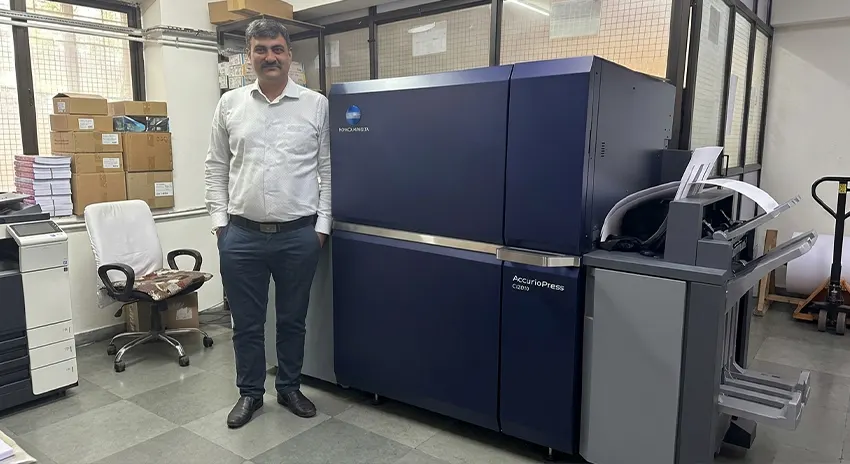
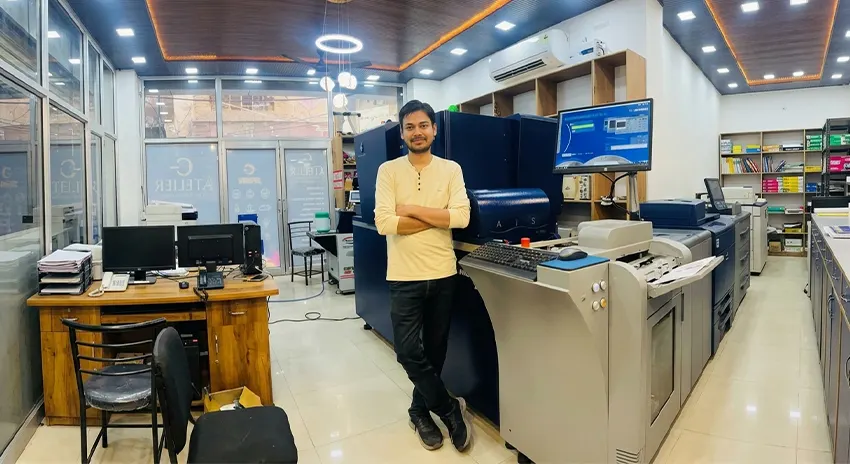
Mudra Production has strengthened its production capabilities with the addition of the Konica Minolta AccurioPrint C4065. The investment aims to support the company’s focus on delivering improved print quality, greater operational efficiency, and meeting the evolving requirements of its customer base.

Mudra Production, founded and led by Shreyas, began its journey as a proprietorship firm under the name Shrenik Photocopy in 2017. Starting as a small-scale printing business, the company gradually expanded its operations by adopting advanced technologies, including UV printing machines, flex printing solutions, laser cutting, and Konica Minolta production machines. Over the years, the company has evolved its capabilities, strengthened its expertise, and established a growing presence in the printing industry.

Mudra Production

With a team of around 10 professionals managing production, machine operations, and daily workflows, Mudra Production caters to a wide range of clients across different sectors, including local businesses and e-commerce customers, offering customised printing and production solutions.

Speaking about the decision to continue investing in Konica Minolta, Shreyas said, “We have been using Konica Minolta machines since 2018, starting with the Konica Minolta bizhub C280 model, followed by Konica Minolta bizhub C226 and bizhub C251i. Our experience with the brand’s reliability, performance, and print quality gave us the confidence to further invest in Konica Minolta technology. The Konica Minolta AccurioPrint C4065 will help us enhance our production capabilities, improve efficiency, and deliver better quality output to our customers.”

Mudra Production operates a diverse technology ecosystem to address different printing requirements. While its UV and flex printing operations utilise machines from Colorjet, True Color, and Canon, its digital black-and-white printing requirements are supported by Kyocera machines. The company’s digital colour printing operations, however, are exclusively powered by Konica Minolta machines.

Discussing the expected return on investment from the new machine, Mr. Shreyas stated, “Since we operate in a remote market compared to metro cities, business growth and demand generation take relatively more time. Considering our current business outlook, we expect to achieve the ROI from the new Konica Minolta machine within the next one to two years.”

Why Enterprise Cybersecurity Strategies Must Include Print Security

Print systems are becoming critical cybersecurity endpoints. Experts discuss governance, compliance, and why document workflows need stronger security oversight.

For most enterprises, cybersecurity discussions begin with cloud infrastructure, endpoints, networks, and increasingly, AI-powered threat detection. Yet one category of enterprise technology often escapes the same level of scrutiny despite handling sensitive financial, legal, healthcare, and employee information every day: printers and document workflows.

Enterprise Cybersecurity

The oversight is becoming harder to ignore. Modern multifunction printers are no longer standalone office devices. They are connected endpoints that interact with cloud environments, enterprise applications, email systems, mobile devices, and document management platforms. As organisations embrace hybrid work models and digital workflows, print infrastructure is becoming part of a broader conversation around data governance, compliance, and information security.

At the same time, enterprises are adopting zero-trust architectures, strengthening identity controls, and preparing for stricter data privacy regulations. This raises an important question: are organisations paying enough attention to the security risks that exist within their print ecosystems?

To understand how this conversation is evolving, CIOL spoke with Katsuhisa Asari, Managing Director, Konica Minolta Business Solutions India, about print security, compliance, AI-driven threats, and the changing role of document workflows in enterprise cybersecurity.

Interview excerpts:

Enterprises today spend heavily on cloud, endpoint, and network security, yet printers are often treated as low-risk hardware. Why does print infrastructure continue to remain outside mainstream cybersecurity conversations despite handling highly sensitive enterprise data?

Historically, print infrastructure has been viewed as a peripheral part of enterprise IT rather than a core cybersecurity asset. Many organisations still see printers primarily as output devices instead of connected endpoints that process, store, and transmit sensitive business information.

The reality is very different today. Modern enterprise printers are integrated with cloud platforms, document management systems, enterprise networks, mobile devices, and workflow applications. They often handle financial records, legal documents, healthcare information, employee data, customer information, and intellectual property.

Cybersecurity investments have traditionally focused on laptops, servers, cloud infrastructure, and mobile devices. Print environments have often received less strategic attention and, in many cases, are managed separately from broader security frameworks.

As hybrid work and cloud-based workflows expand, organisations are increasingly recognising that printers require the same governance, authentication controls, encryption, monitoring, and access management applied to other enterprise IT assets.

In hybrid workplaces, documents move across devices, homes, cloud systems, and office networks simultaneously. Has print security evolved from an IT issue into a broader data governance and compliance challenge?

Yes, increasingly so. In hybrid environments, information no longer remains within a single office network. Documents move across cloud platforms, remote workstations, mobile devices, enterprise applications, and print environments.

As a result, print security is becoming closely linked to data governance, compliance, and risk management. Sensitive information often moves through print and document workflows, creating potential exposure points if governance frameworks are weak.

Regulatory expectations are also becoming stricter. Organisations are expected to maintain greater visibility and control over how information is accessed, shared, stored, and printed. This is pushing print security closer to enterprise compliance strategies, identity management systems, and zero-trust frameworks. Today, the focus is no longer just securing devices. It is about securing information throughout its lifecycle.

Many organisations are adopting zero-trust architectures. How practical is zero trust in print environments where legacy devices and unmanaged endpoints are still widely used?

The concept is highly relevant, but implementation can be challenging. Many enterprises operate mixed environments where modern systems coexist with older devices that were not designed with today’s security requirements in mind. Some legacy printers may lack support for advanced encryption, secure boot processes, firmware integrity validation, or modern authentication methods.

However, organisations are gradually moving toward zero-trust-aligned print strategies through user authentication, pull printing, encrypted communication, firmware protection, network segmentation, and centralised device management.

The transition may take time, but printers are increasingly being treated as critical network-connected endpoints that must align with broader cybersecurity frameworks.

As AI-powered cyberattacks become more sophisticated, could connected printers and document workflows emerge as easier entry points for attackers?

Organisations are increasingly taking a holistic view of cybersecurity across all connected infrastructure, including print environments. Modern print systems are no longer isolated devices. They connect with enterprise applications, cloud platforms, mobile devices, and workflow systems. This makes security across the entire ecosystem important.

At the same time, enterprise print technology has evolved considerably. Security capabilities such as encryption, authentication, secure boot processes, firmware protection, access controls, and centralised management are now common in modern environments. The discussion today is less about identifying a single weak point and more about ensuring consistent security policies across all connected systems.

A properly managed print environment should be viewed as part of a broader enterprise cybersecurity strategy rather than as a separate technology category.

Many cybersecurity strategies focus on digital systems, while document workflows still involve human intervention. Does human behaviour remain the biggest vulnerability in document security?

Human behaviour continues to play a major role. Document workflows involve multiple touchpoints across digital and physical environments. Risks often arise from unauthorised access, insecure document handling, weak passwords, accidental sharing, or a lack of awareness about information governance policies.

Hybrid work environments have increased this complexity because employees now access and manage information across multiple devices, networks, and locations.

Technology remains important, but organisations are increasingly realising that document security also depends on employee awareness, governance policies, training, and secure information-handling practices. Effective security requires a combination of technology, process, and user accountability.

With increasing regulatory scrutiny around data privacy and compliance, especially in BFSI, healthcare, and government, are enterprises underestimating the risks linked to unsecured print ecosystems?

Organisations are becoming more aware of these risks, particularly in sectors that handle highly sensitive information. Regulators are placing greater emphasis on visibility, access controls, auditability, retention policies, and secure information handling throughout the document lifecycle.

This is encouraging enterprises to strengthen areas such as secure print release, user authentication, encryption, audit trails, centralised device management, and workflow governance.

Rather than viewing print security as a standalone issue, many organisations are integrating it into broader cybersecurity and compliance strategies. The objective is to create secure, accountable information environments that protect sensitive data across both digital and physical workflows.

Konica Minolta India Brings Together Strategic Partners to Chart the Next Phase of Growth at Annual Strategic Partner Conference 2026

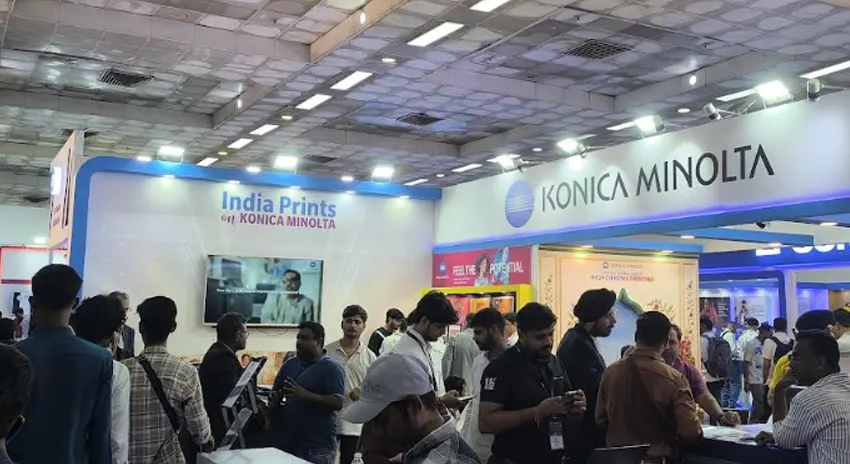
India, 08 June,2026: Konica Minolta Business Solutions India Pvt. Ltd. has successfully concluded its Annual Strategic Partner Conference (ASPC) 2026, held from 1–3 June 2026 in Goa. Centred around the theme “Shaping New Heights Together – Powering the Rise,” the conference brought together Konica Minolta’s partner ecosystem from across the country to strengthen collaboration, exchange strategic insights, and align on the opportunities shaping the future of business and technology.

The three-day gathering served as an important platform for reinforcing a shared vision for growth amid a rapidly evolving business landscape. Aligned with the theme, ‘Shaping New Heights Together – Powering the Rise,’ the conference underscored Konica Minolta’s commitment to strengthening its partner ecosystem and fostering deeper collaboration to drive mutual success. Through leadership sessions, strategic business reviews, market outlook discussions, and partner and stakeholder engagement initiatives, the conference focused on enabling partners to unlock new opportunities across office solutions, digital transformation, and production print businesses.

ASPC-2026

Speaking on the occasion, Mr. Katsuhisa Asari, Managing Director, Konica Minolta Business Solutions India Pvt. Ltd., said, “Over the years, our partner ecosystem has played a critical role in expanding our reach, delivering value to customers, and driving business growth across the country. This year’s theme, ‘Shaping New Heights Together – Powering the Rise,’ captures our collective ambition to accelerate growth, embrace emerging opportunities, and create greater value in an evolving marketplace. The Annual Strategic Partner Conference provides an important platform to align on strategic priorities, share insights, and strengthen collaboration as we shape the future together. As technology continues to transform industries and customer expectations evolve, we remain committed to empowering our partners with cutting-edge solutions, market insights, and the support needed to drive sustainable growth and long-term success.”

The conference also recognised outstanding partner achievements through a dedicated awards and recognition programme, celebrating excellence in business performance, customer engagement, market development, and innovation. The event featured participation from senior leadership across Konica Minolta’s global and India teams, who shared insights on industry trends, evolving customer expectations, technological advancements, and the company’s long-term growth strategy. Discussions reflected on key achievements from the previous financial year while outlining strategic priorities for the year ahead, with a focus on enhancing market responsiveness, delivering greater customer value, and driving sustainable growth through innovation, collaboration, and stronger partner engagement.

Our key strategic priorities in India focus on driving digital transformation through automation, workflow integration, and intelligent connected solutions. We aim to move beyond products and position ourselves as a technology partner, enabling businesses to improve efficiency, reduce costs, and enhance productivity.

ASPC 2026 reinforced Konica Minolta India’s commitment to fostering a strong, collaborative partner network and highlighted the critical role partners continue to play in driving business growth, technology adoption, and customer success across the country.

Why Print Businesses are moving from Volume to Value

-Praveen Seth, Head of Digital Workplace Business HQ, Konica Minolta Business Solutions India.

India, 12 May,2026: Praveen Seth, Head of Digital Workplace Business HQ, Konica Minolta Business Solutions India in an interaction with CIOTechOutlook shared his views on why are luxury brands, premium packaging, and personalized experiences becoming the new growth engines for print businesses, can print companies make more profit from fewer orders by shifting from volume-driven operations to value-led innovation and more.

Praveen Seth is a seasoned operations and customer service leader with almost 35 years of experience across industry pioneers like Xerox and Konica Minolta, currently serving as Head of Digital Workplace Business HQ at Konica Minolta Business Solutions India. With a strong background in post-sales operations, digital workplace solutions, field service management, and customer relationship management, he has built expertise in driving operational efficiency and enhancing service delivery within the technology and business solutions sector.

Is the “print is dying” narrative actually pushing the industry toward its most profitable transformation yet?

The print industry today is undergoing one of its most significant transformations, driven by changing consumer expectations, technological advancements, and evolving business requirements. Print continues to remain an essential part of communication, packaging, publishing, branding, and customer engagement across industries globally.

Today, customer expectations are changing rapidly. Brands are demanding shorter runs, faster turnaround times, greater personalisation, and more sustainable production practices. This has accelerated the adoption of digital technologies, automation, smart workflows, and data-driven production models across the print ecosystem. Instead of relying only on scale, print businesses are increasingly focusing on high-value applications such as packaging, labels, embellishments, customised marketing materials, and on-demand production.

What is emerging is a smarter print economy where efficiency, flexibility, and innovation matter more than sheer production volume. Businesses that are adapting to this transition are finding new revenue streams, stronger customer relationships, and better operational control. The future of print will be determined by how effectively the industry embraces technology, automation, sustainability, and changing consumer expectations.

Why are luxury brands, premium packaging, and personalized experiences becoming the new growth engines for print businesses?

Luxury brands, premium packaging, and personalised experiences are becoming major growth drivers for the print industry because consumer expectations today extend far beyond just the product itself. Brands are increasingly focusing on creating stronger emotional connections, differentiated customer experiences, and premium visual identities, and print plays a critical role in enabling that.

In sectors such as luxury retail, cosmetics, fashion, food & beverage, packaging has evolved into a key part of brand storytelling. High-quality print finishes, embellishments, textured effects, metallics, specialty colours, and customized packaging help brands create exclusivity and stronger shelf appeal in a highly competitive market.

At the same time, personalisation is becoming increasingly important. Consumers now expect more tailored and unique experiences, whether through personalised labels, limited-edition packaging, regional customisation, or variable data campaigns. This shift is driving demand for flexible and digitally enabled print technologies that can efficiently manage shorter runs and customised outputs.

For print businesses, this transition presents a strong opportunity to move beyond commoditised production and toward higher-value applications with better margins. The industry is increasingly evolving from being purely production-oriented to becoming a strategic enabler of customer experience, branding, and premiumisation.

Can print companies make more profit from fewer orders by shifting from volume-driven operations to value-led innovation?

The print industry is not undergoing a complete shift away from volume-driven operations, but rather evolving towards a more balanced model that combines scale with value-added innovation. While high-volume printing continues to remain fundamental to the industry, changing client expectations and market dynamics are encouraging businesses to diversify their offerings and focus on higher-value services alongside traditional production.

Large-scale printing remains critical for operational efficiency, capacity utilisation, and servicing sectors such as FMCG, publishing, retail, and logistics, where consistency, speed, and cost efficiency are essential. For many print companies, volume-based work continues to provide stability and predictable revenue streams.

At the same time, brands today are looking beyond basic print execution and seeking solutions that support consumer engagement, premium brand positioning, sustainability goals, and supply chain Optimisation.

How are niche printing segments like smart packaging, sustainable labels, and custom publishing reshaping the future of print?

Niche printing segments such as smart packaging, sustainable labels, and custom publishing are significantly reshaping the future of the print industry by moving it toward more specialised, application-driven, and value-added services. These segments reflect changing consumer expectations, evolving brand strategies, and the growing need for personalisation, sustainability, and connected experiences.

Smart packaging, for instance, is transforming packaging from a purely protective medium into an interactive communication tool. Technologies such as QR codes, RFID integration, traceability features, and connected packaging are helping brands enhance customer engagement, improve supply chain visibility, and support authentication and anti-counterfeit measures.

Similarly, sustainable labels and eco-conscious packaging solutions are gaining momentum as brands and consumers become more environmentally aware. There is increasing demand for recyclable materials, reduced waste production, sustainable inks, and resource-efficient printing processes. Sustainability is no longer just a compliance requirement; it is becoming a competitive differentiator.

Custom publishing and on-demand printing are also creating new opportunities by enabling hyper-personalisation, regional customisation, and shorter print runs without compromising efficiency. Whether in books, marketing materials, photo products, or packaging, customers increasingly value flexibility and relevance over mass production.

Together, these niche segments are helping redefine print as a smarter, more adaptive, and innovation-led industry focused on delivering higher-value experiences rather than simply large production volumes.

Print-Businesses

Why are modern consumers willing to pay more for tactile, premium, and personalized print experiences in a digital-first world?

In an increasingly digital-first world, tactile, premium, and personalised print experiences offer something that digital communication often cannot: a sense of physical connection, exclusivity, and emotional engagement. As consumers are exposed to a constant stream of digital content every day, thoughtfully designed print experiences tend to stand out more and create a stronger lasting impression.

Premium print has become closely linked with brand perception and customer experience. Elements such as textured finishes, specialty papers, embellishments, premium packaging, and customised designs help create a more immersive and memorable interaction with a product or brand. In many cases, consumers associate these physical details with higher quality, authenticity, and greater brand value.

Personalisation is another major factor driving this shift. Today’s consumers increasingly expect experiences tailored to their preferences, whether through customized packaging, limited-edition products, variable data printing, or region-specific communication. Personalized print helps brands create deeper emotional connections and a stronger sense of individuality for customers.

Additionally, print offers permanence and trust in a way that digital communication sometimes struggles to achieve. A well-crafted printed piece often feels more intentional, credible, and valuable. As a result, brands across luxury, retail, publishing, and packaging are increasingly using premium print not just as a communication tool, but as a key part of the overall customer experience strategy.

Why are print businesses shifting from high-volume production to high-value specialized printing services?

Print businesses are increasingly shifting from high-volume production to high-value specialised printing services because market demands, customer expectations, and business economics are rapidly evolving. Competing purely on volume and pricing has become increasingly challenging, with shrinking margins and growing operational pressures across the industry. As a result, many print providers are focusing on differentiated services that offer greater profitability and long-term sustainability.

Today, brands are looking for more than just printed output. They want customisation, faster turnaround times, premium finishes, sustainable solutions, and stronger customer engagement. This has created growing demand for specialised applications such as premium packaging, labels, embellishments, variable data printing, short-run production, photo products, and personalized marketing materials. These services not only offer higher value to customers but also allow print businesses to command better margins.

Technology has also made this transition more practical. Advances in digital printing, automation, workflow integration, and colour management now allow businesses to efficiently handle shorter runs and complex jobs without compromising productivity or quality.

In many ways, the industry is moving from a manufacturing mindset to a solutions-oriented mindset. The focus is no longer only on producing large quantities, but on delivering creativity, flexibility, speed, and meaningful brand experiences. This shift is helping print businesses build stronger customer relationships and more resilient growth models for the future.

How can print businesses unlock higher margins by moving from commoditized printing to creative and value-added services?

Print businesses can unlock significantly higher margins by focusing on creative, specialised, and value-added services that are harder to replicate and more closely aligned with evolving customer expectations. In highly competitive markets, standard printing services often become price-driven, making it difficult for businesses to sustain profitability purely through volume.

Today, brands are increasingly seeking solutions that help them stand out, strengthen customer engagement, and create differentiated experiences. This is creating strong demand for services such as premium packaging, embellishments, specialty finishes, personalised printing, variable data applications, short-run production, smart labels, and customised marketing materials. These offerings deliver greater perceived value and allow print providers to position themselves as strategic partners rather than just production vendors.

Technology is also enabling this transition by making shorter runs, customisation, and complex applications more commercially viable. Automation, digital workflows, and intelligent production systems help improve efficiency while reducing waste and turnaround time, allowing businesses to take on higher-value projects more profitably.

Ultimately, higher margins in the future print industry are likely to come from creativity, flexibility, innovation, and customer-centric solutions rather than scale alone. Businesses that successfully combine technology with application expertise and design-driven services will be better positioned to create sustainable differentiation and long-term growth.

India is a key strategic growth market for Konica Minolta: Katsuhisa Asari

-In this interview with Rakesh Rao, Katsuhisa Asari, MD, Konica Minolta Business Solutions India, articulates his strategic vision for future-ready operations and the company’s plans for India.

India, 08 May,2026: Konica Minolta has leveraged 15 years in India to evolve from traditional printing to integrated digital workplace solutions. Its growth strategy focuses on automation, workflow integration, and expansion into high-growth segments such as labels and packaging. In this interview with Rakesh Rao, Katsuhisa Asari, Managing Director, Konica Minolta Business Solutions India, articulates his strategic vision for future-ready operations and the company’s plans for India.

Konica Minolta recently completed 15 years in India. What milestones have defined this journey, and which end-user industries have driven demand?

Konica Minolta’s 15-year journey in India has been shaped by a consistent focus on innovation, customer-centricity, and integrated digital solutions. Key milestones include establishing a strong nationwide presence, building a robust channel and service network, and becoming a market leader in production print. Over time, we have evolved from offering standalone devices to delivering intelligent, workflow-driven solutions that enable businesses to improve efficiency, scalability, and output quality.

One of the key learnings from this journey is that customers today are increasingly outcome focused. They are looking for solutions that not only enhance print capabilities but also streamline operations, reduce costs, and enable faster decision-making. This has guided our shift towards automation, intelligent document management, and connected workplace solutions.

Looking ahead, our next phase of growth will be driven by deeper adoption of digital transformation, workflow integration, and expansion into emerging application areas such as labels, packaging, and value-added printing. We also see strong potential in regional markets, where businesses are rapidly adopting modern, scalable technologies.

As Managing Director, what are your strategic priorities for growth in India’s evolving digital and print ecosystem?

Our key strategic priorities in India focus on driving digital transformation through automation, workflow integration, and intelligent connected solutions. We aim to move beyond products and position ourselves as a technology partner, enabling businesses to improve efficiency, reduce costs, and enhance productivity.

We are also expanding in high-growth areas such as labels, packaging, and regional markets, while strengthening our channel network and service capabilities. Overall, our focus is on delivering measurable business outcomes and supporting customers in building scalable, future-ready operations.

With digital transformation gaining emphasis, how is Konica Minolta evolving beyond traditional printing?

Traditional printing has always been an integral part of the company’s operations. But with the increasing emphasis on the digital transformation, we are evolving traditional printing by building on its strong imaging expertise and expanding into end-to-end digital workplace solutions. Printing continues to remain a core strength, but today it is part of a larger, integrated ecosystem that combines hardware, software, and intelligent workflows. Through solutions such as intelligent document management, workflow automation, and Managed Content Services (MCS), we enable organisations to move from manual, fragmented processes to connected, automated, and data-driven environments. This helps businesses digitise information, streamline operations, and improve decision-making.

Our focus is on delivering measurable business outcomes, enhancing productivity, reducing operational complexity, and enabling seamless information flow. By combining our imaging heritage with digital innovation and a consultative approach, we are positioning Konica Minolta as a comprehensive digital workplace partner supporting enterprises in their transformation journey.

How do you see India’s printing industry evolving over the next 5–10 years?

The value equation is changing, yet India’s print industry will expand. Demand is shifting toward mass customisation, quicker turnaround times, and shorter runs, areas where digital printing shines. For high-volume applications, traditional print is still crucial. Automation, data intelligence, and digital technology will improve accuracy and agility rather than replace traditional ways in the upcoming integrative evolution. In India, over the next 5-10 years, businesses that operate quickly and adaptively across both domains with the help of integrated workflows will prosper.

Sustainability is becoming central to business strategies globally. How is sustainability integrated into Konica Minolta’s strategy in India?

Sustainability is a core pillar of Konica Minolta’s global and India strategy, guided by long-term frameworks such as Eco Vision 2050 and a strong focus on addressing climate change and resource efficiency. We are advancing energy-efficient technologies, reducing emissions, and optimising production processes, supported by initiatives like our Green Products and Green Factory certification systems. Our efforts also extend to decarbonisation across operations and the supply chain, increasing the use of renewable energy, and promoting responsible practices such as recycling, resource conservation, and the reduction of packaging materials.

In India, this commitment is further strengthened through solutions that enable customers to operate more sustainably. Through on-demand printing, intelligent document management, workflow automation, and Managed Content Services, we help organisations reduce waste, minimise paper usage, and improve operational efficiency. Our focus is to ensure sustainability is not just an internal priority, but a value we actively deliver, helping businesses build more efficient, responsible, and future-ready operations.

growth-market

What is the role of print in emerging markets like India despite paperless trends?

While digital transformation continues to accelerate, the future is not about eliminating print but about creating a balanced ecosystem where physical and digital workflows coexist. In markets like India, paper continues to play a critical role across sectors such as education, healthcare, packaging, and compliance-driven industries, where physical documents remain essential for communication, trust, and record-keeping.

What is evolving is the role of print. It is becoming more intelligent, efficient, and purpose-driven, supported by digital integration and automation. Modern print solutions are enabling on-demand production, reduced waste, personalisation, and faster turnaround times, making them more sustainable and business-relevant. In this context, the printing industry will continue to be a key enabler, especially in emerging markets, by bridging physical and digital workflows and supporting organisations in building more efficient and connected operations.

How are automation, AI, and smart manufacturing reshaping the industry globally?

Advancements such as automation, AI, and smart manufacturing are fundamentally reshaping the printing and imaging industry by transforming it from a device-led ecosystem to a data-driven, intelligent, and service-oriented environment. Today, AI is playing a central role across the value chain, from intelligent document capture and processing to predictive maintenance and workflow automation, enabling businesses to operate with greater efficiency, accuracy, and speed. For instance, AI-powered solutions can automatically capture, classify, and process information from documents, significantly reducing manual effort, minimising errors, and improving turnaround times.

At the same time, automation and smart manufacturing are enabling more agile, cost-efficient, and scalable production environments. Technologies such as Managed Print Services and cloud-based platforms are helping organisations optimise costs, improve device utilisation, and ensure proactive maintenance through predictive analytics. Additionally, the integration of AI in areas like cybersecurity, ESG data management, and intelligent workflows is allowing businesses to build more secure, compliant, and sustainable operations. Overall, these advancements are redefining the industry by shifting the focus from standalone print capabilities to end-to-end digital ecosystems that drive productivity, reduce operational complexity, and support future-ready enterprise transformation.

What are Konica Minolta’s growth plans for India?

India remains a key strategic growth market for Konica Minolta, and our plans are focused on expanding our presence through deeper market penetration, enhanced service capabilities, and continued investments in digital solutions. We are strengthening our reach across Tier 2 and Tier 3 markets, where demand for automation, digital printing, and workflow solutions is growing rapidly.

We are also investing in expanding our channel ecosystem and service network to ensure faster, more localised support for customers. In parallel, our focus is on scaling our portfolio across high-growth segments such as labels, packaging, and value-added applications, while continuing to build capabilities in digital workplace solutions, automation, and intelligent workflows.

Overall, our growth strategy is centred on long-term investment in the market, customer-centric innovation, and building a strong, scalable ecosystem that supports India’s evolving digital and print landscape.

Back to Top