Konica Minolta India Brings Together Strategic Partners to Chart the Next Phase of Growth at Annual Strategic Partner Conference 2026

Konica Minolta India Brings Together Strategic Partners to Chart the Next Phase of Growth at Annual Strategic Partner Conference 2026

India, 08 June,2026: Konica Minolta Business Solutions India Pvt. Ltd. has successfully concluded its Annual Strategic Partner Conference (ASPC) 2026, held from 1–3 June 2026 in Goa. Centred around the theme “Shaping New Heights Together – Powering the Rise,” the conference brought together Konica Minolta’s partner ecosystem from across the country to strengthen collaboration, exchange strategic insights, and align on the opportunities shaping the future of business and technology.

The three-day gathering served as an important platform for reinforcing a shared vision for growth amid a rapidly evolving business landscape. Aligned with the theme, ‘Shaping New Heights Together – Powering the Rise,’ the conference underscored Konica Minolta’s commitment to strengthening its partner ecosystem and fostering deeper collaboration to drive mutual success. Through leadership sessions, strategic business reviews, market outlook discussions, and partner and stakeholder engagement initiatives, the conference focused on enabling partners to unlock new opportunities across office solutions, digital transformation, and production print businesses.

ASPC-2026

Speaking on the occasion, Mr. Katsuhisa Asari, Managing Director, Konica Minolta Business Solutions India Pvt. Ltd., said, “Over the years, our partner ecosystem has played a critical role in expanding our reach, delivering value to customers, and driving business growth across the country. This year’s theme, ‘Shaping New Heights Together – Powering the Rise,’ captures our collective ambition to accelerate growth, embrace emerging opportunities, and create greater value in an evolving marketplace. The Annual Strategic Partner Conference provides an important platform to align on strategic priorities, share insights, and strengthen collaboration as we shape the future together. As technology continues to transform industries and customer expectations evolve, we remain committed to empowering our partners with cutting-edge solutions, market insights, and the support needed to drive sustainable growth and long-term success.”

The conference also recognised outstanding partner achievements through a dedicated awards and recognition programme, celebrating excellence in business performance, customer engagement, market development, and innovation. The event featured participation from senior leadership across Konica Minolta’s global and India teams, who shared insights on industry trends, evolving customer expectations, technological advancements, and the company’s long-term growth strategy. Discussions reflected on key achievements from the previous financial year while outlining strategic priorities for the year ahead, with a focus on enhancing market responsiveness, delivering greater customer value, and driving sustainable growth through innovation, collaboration, and stronger partner engagement.

Our key strategic priorities in India focus on driving digital transformation through automation, workflow integration, and intelligent connected solutions. We aim to move beyond products and position ourselves as a technology partner, enabling businesses to improve efficiency, reduce costs, and enhance productivity.

ASPC 2026 reinforced Konica Minolta India’s commitment to fostering a strong, collaborative partner network and highlighted the critical role partners continue to play in driving business growth, technology adoption, and customer success across the country.

Why Print Businesses are moving from Volume to Value

Why Print Businesses are moving from Volume to Value

-Praveen Seth, Head of Digital Workplace Business HQ, Konica Minolta Business Solutions India.

India, 12 May,2026: Praveen Seth, Head of Digital Workplace Business HQ, Konica Minolta Business Solutions India in an interaction with CIOTechOutlook shared his views on why are luxury brands, premium packaging, and personalized experiences becoming the new growth engines for print businesses, can print companies make more profit from fewer orders by shifting from volume-driven operations to value-led innovation and more.

Praveen Seth is a seasoned operations and customer service leader with almost 35 years of experience across industry pioneers like Xerox and Konica Minolta, currently serving as Head of Digital Workplace Business HQ at Konica Minolta Business Solutions India. With a strong background in post-sales operations, digital workplace solutions, field service management, and customer relationship management, he has built expertise in driving operational efficiency and enhancing service delivery within the technology and business solutions sector.

Is the “print is dying” narrative actually pushing the industry toward its most profitable transformation yet?

The print industry today is undergoing one of its most significant transformations, driven by changing consumer expectations, technological advancements, and evolving business requirements. Print continues to remain an essential part of communication, packaging, publishing, branding, and customer engagement across industries globally.

Today, customer expectations are changing rapidly. Brands are demanding shorter runs, faster turnaround times, greater personalisation, and more sustainable production practices. This has accelerated the adoption of digital technologies, automation, smart workflows, and data-driven production models across the print ecosystem. Instead of relying only on scale, print businesses are increasingly focusing on high-value applications such as packaging, labels, embellishments, customised marketing materials, and on-demand production.

What is emerging is a smarter print economy where efficiency, flexibility, and innovation matter more than sheer production volume. Businesses that are adapting to this transition are finding new revenue streams, stronger customer relationships, and better operational control. The future of print will be determined by how effectively the industry embraces technology, automation, sustainability, and changing consumer expectations.

Why are luxury brands, premium packaging, and personalized experiences becoming the new growth engines for print businesses?

Luxury brands, premium packaging, and personalised experiences are becoming major growth drivers for the print industry because consumer expectations today extend far beyond just the product itself. Brands are increasingly focusing on creating stronger emotional connections, differentiated customer experiences, and premium visual identities, and print plays a critical role in enabling that.

In sectors such as luxury retail, cosmetics, fashion, food & beverage, packaging has evolved into a key part of brand storytelling. High-quality print finishes, embellishments, textured effects, metallics, specialty colours, and customized packaging help brands create exclusivity and stronger shelf appeal in a highly competitive market.

At the same time, personalisation is becoming increasingly important. Consumers now expect more tailored and unique experiences, whether through personalised labels, limited-edition packaging, regional customisation, or variable data campaigns. This shift is driving demand for flexible and digitally enabled print technologies that can efficiently manage shorter runs and customised outputs.

For print businesses, this transition presents a strong opportunity to move beyond commoditised production and toward higher-value applications with better margins. The industry is increasingly evolving from being purely production-oriented to becoming a strategic enabler of customer experience, branding, and premiumisation.

Can print companies make more profit from fewer orders by shifting from volume-driven operations to value-led innovation?

The print industry is not undergoing a complete shift away from volume-driven operations, but rather evolving towards a more balanced model that combines scale with value-added innovation. While high-volume printing continues to remain fundamental to the industry, changing client expectations and market dynamics are encouraging businesses to diversify their offerings and focus on higher-value services alongside traditional production.

Large-scale printing remains critical for operational efficiency, capacity utilisation, and servicing sectors such as FMCG, publishing, retail, and logistics, where consistency, speed, and cost efficiency are essential. For many print companies, volume-based work continues to provide stability and predictable revenue streams.

At the same time, brands today are looking beyond basic print execution and seeking solutions that support consumer engagement, premium brand positioning, sustainability goals, and supply chain Optimisation.

How are niche printing segments like smart packaging, sustainable labels, and custom publishing reshaping the future of print?

Niche printing segments such as smart packaging, sustainable labels, and custom publishing are significantly reshaping the future of the print industry by moving it toward more specialised, application-driven, and value-added services. These segments reflect changing consumer expectations, evolving brand strategies, and the growing need for personalisation, sustainability, and connected experiences.

Smart packaging, for instance, is transforming packaging from a purely protective medium into an interactive communication tool. Technologies such as QR codes, RFID integration, traceability features, and connected packaging are helping brands enhance customer engagement, improve supply chain visibility, and support authentication and anti-counterfeit measures.

Similarly, sustainable labels and eco-conscious packaging solutions are gaining momentum as brands and consumers become more environmentally aware. There is increasing demand for recyclable materials, reduced waste production, sustainable inks, and resource-efficient printing processes. Sustainability is no longer just a compliance requirement; it is becoming a competitive differentiator.

Custom publishing and on-demand printing are also creating new opportunities by enabling hyper-personalisation, regional customisation, and shorter print runs without compromising efficiency. Whether in books, marketing materials, photo products, or packaging, customers increasingly value flexibility and relevance over mass production.

Together, these niche segments are helping redefine print as a smarter, more adaptive, and innovation-led industry focused on delivering higher-value experiences rather than simply large production volumes.

Print-Businesses

Why are modern consumers willing to pay more for tactile, premium, and personalized print experiences in a digital-first world?

In an increasingly digital-first world, tactile, premium, and personalised print experiences offer something that digital communication often cannot: a sense of physical connection, exclusivity, and emotional engagement. As consumers are exposed to a constant stream of digital content every day, thoughtfully designed print experiences tend to stand out more and create a stronger lasting impression.

Premium print has become closely linked with brand perception and customer experience. Elements such as textured finishes, specialty papers, embellishments, premium packaging, and customised designs help create a more immersive and memorable interaction with a product or brand. In many cases, consumers associate these physical details with higher quality, authenticity, and greater brand value.

Personalisation is another major factor driving this shift. Today’s consumers increasingly expect experiences tailored to their preferences, whether through customized packaging, limited-edition products, variable data printing, or region-specific communication. Personalized print helps brands create deeper emotional connections and a stronger sense of individuality for customers.

Additionally, print offers permanence and trust in a way that digital communication sometimes struggles to achieve. A well-crafted printed piece often feels more intentional, credible, and valuable. As a result, brands across luxury, retail, publishing, and packaging are increasingly using premium print not just as a communication tool, but as a key part of the overall customer experience strategy.

Why are print businesses shifting from high-volume production to high-value specialized printing services?

Print businesses are increasingly shifting from high-volume production to high-value specialised printing services because market demands, customer expectations, and business economics are rapidly evolving. Competing purely on volume and pricing has become increasingly challenging, with shrinking margins and growing operational pressures across the industry. As a result, many print providers are focusing on differentiated services that offer greater profitability and long-term sustainability.

Today, brands are looking for more than just printed output. They want customisation, faster turnaround times, premium finishes, sustainable solutions, and stronger customer engagement. This has created growing demand for specialised applications such as premium packaging, labels, embellishments, variable data printing, short-run production, photo products, and personalized marketing materials. These services not only offer higher value to customers but also allow print businesses to command better margins.

Technology has also made this transition more practical. Advances in digital printing, automation, workflow integration, and colour management now allow businesses to efficiently handle shorter runs and complex jobs without compromising productivity or quality.

In many ways, the industry is moving from a manufacturing mindset to a solutions-oriented mindset. The focus is no longer only on producing large quantities, but on delivering creativity, flexibility, speed, and meaningful brand experiences. This shift is helping print businesses build stronger customer relationships and more resilient growth models for the future.

How can print businesses unlock higher margins by moving from commoditized printing to creative and value-added services?

Print businesses can unlock significantly higher margins by focusing on creative, specialised, and value-added services that are harder to replicate and more closely aligned with evolving customer expectations. In highly competitive markets, standard printing services often become price-driven, making it difficult for businesses to sustain profitability purely through volume.

Today, brands are increasingly seeking solutions that help them stand out, strengthen customer engagement, and create differentiated experiences. This is creating strong demand for services such as premium packaging, embellishments, specialty finishes, personalised printing, variable data applications, short-run production, smart labels, and customised marketing materials. These offerings deliver greater perceived value and allow print providers to position themselves as strategic partners rather than just production vendors.

Technology is also enabling this transition by making shorter runs, customisation, and complex applications more commercially viable. Automation, digital workflows, and intelligent production systems help improve efficiency while reducing waste and turnaround time, allowing businesses to take on higher-value projects more profitably.

Ultimately, higher margins in the future print industry are likely to come from creativity, flexibility, innovation, and customer-centric solutions rather than scale alone. Businesses that successfully combine technology with application expertise and design-driven services will be better positioned to create sustainable differentiation and long-term growth.

India is a key strategic growth market for Konica Minolta: Katsuhisa Asari

India is a key strategic growth market for Konica Minolta: Katsuhisa Asari

-In this interview with Rakesh Rao, Katsuhisa Asari, MD, Konica Minolta Business Solutions India, articulates his strategic vision for future-ready operations and the company’s plans for India.

India, 08 May,2026: Konica Minolta has leveraged 15 years in India to evolve from traditional printing to integrated digital workplace solutions. Its growth strategy focuses on automation, workflow integration, and expansion into high-growth segments such as labels and packaging. In this interview with Rakesh Rao, Katsuhisa Asari, Managing Director, Konica Minolta Business Solutions India, articulates his strategic vision for future-ready operations and the company’s plans for India.

Konica Minolta recently completed 15 years in India. What milestones have defined this journey, and which end-user industries have driven demand?

Konica Minolta’s 15-year journey in India has been shaped by a consistent focus on innovation, customer-centricity, and integrated digital solutions. Key milestones include establishing a strong nationwide presence, building a robust channel and service network, and becoming a market leader in production print. Over time, we have evolved from offering standalone devices to delivering intelligent, workflow-driven solutions that enable businesses to improve efficiency, scalability, and output quality.

One of the key learnings from this journey is that customers today are increasingly outcome focused. They are looking for solutions that not only enhance print capabilities but also streamline operations, reduce costs, and enable faster decision-making. This has guided our shift towards automation, intelligent document management, and connected workplace solutions.

Looking ahead, our next phase of growth will be driven by deeper adoption of digital transformation, workflow integration, and expansion into emerging application areas such as labels, packaging, and value-added printing. We also see strong potential in regional markets, where businesses are rapidly adopting modern, scalable technologies.

As Managing Director, what are your strategic priorities for growth in India’s evolving digital and print ecosystem?

Our key strategic priorities in India focus on driving digital transformation through automation, workflow integration, and intelligent connected solutions. We aim to move beyond products and position ourselves as a technology partner, enabling businesses to improve efficiency, reduce costs, and enhance productivity.

We are also expanding in high-growth areas such as labels, packaging, and regional markets, while strengthening our channel network and service capabilities. Overall, our focus is on delivering measurable business outcomes and supporting customers in building scalable, future-ready operations.

With digital transformation gaining emphasis, how is Konica Minolta evolving beyond traditional printing?

Traditional printing has always been an integral part of the company’s operations. But with the increasing emphasis on the digital transformation, we are evolving traditional printing by building on its strong imaging expertise and expanding into end-to-end digital workplace solutions. Printing continues to remain a core strength, but today it is part of a larger, integrated ecosystem that combines hardware, software, and intelligent workflows. Through solutions such as intelligent document management, workflow automation, and Managed Content Services (MCS), we enable organisations to move from manual, fragmented processes to connected, automated, and data-driven environments. This helps businesses digitise information, streamline operations, and improve decision-making.

Our focus is on delivering measurable business outcomes, enhancing productivity, reducing operational complexity, and enabling seamless information flow. By combining our imaging heritage with digital innovation and a consultative approach, we are positioning Konica Minolta as a comprehensive digital workplace partner supporting enterprises in their transformation journey.

How do you see India’s printing industry evolving over the next 5–10 years?

The value equation is changing, yet India’s print industry will expand. Demand is shifting toward mass customisation, quicker turnaround times, and shorter runs, areas where digital printing shines. For high-volume applications, traditional print is still crucial. Automation, data intelligence, and digital technology will improve accuracy and agility rather than replace traditional ways in the upcoming integrative evolution. In India, over the next 5-10 years, businesses that operate quickly and adaptively across both domains with the help of integrated workflows will prosper.

Sustainability is becoming central to business strategies globally. How is sustainability integrated into Konica Minolta’s strategy in India?

Sustainability is a core pillar of Konica Minolta’s global and India strategy, guided by long-term frameworks such as Eco Vision 2050 and a strong focus on addressing climate change and resource efficiency. We are advancing energy-efficient technologies, reducing emissions, and optimising production processes, supported by initiatives like our Green Products and Green Factory certification systems. Our efforts also extend to decarbonisation across operations and the supply chain, increasing the use of renewable energy, and promoting responsible practices such as recycling, resource conservation, and the reduction of packaging materials.

In India, this commitment is further strengthened through solutions that enable customers to operate more sustainably. Through on-demand printing, intelligent document management, workflow automation, and Managed Content Services, we help organisations reduce waste, minimise paper usage, and improve operational efficiency. Our focus is to ensure sustainability is not just an internal priority, but a value we actively deliver, helping businesses build more efficient, responsible, and future-ready operations.

growth-market

What is the role of print in emerging markets like India despite paperless trends?

While digital transformation continues to accelerate, the future is not about eliminating print but about creating a balanced ecosystem where physical and digital workflows coexist. In markets like India, paper continues to play a critical role across sectors such as education, healthcare, packaging, and compliance-driven industries, where physical documents remain essential for communication, trust, and record-keeping.

What is evolving is the role of print. It is becoming more intelligent, efficient, and purpose-driven, supported by digital integration and automation. Modern print solutions are enabling on-demand production, reduced waste, personalisation, and faster turnaround times, making them more sustainable and business-relevant. In this context, the printing industry will continue to be a key enabler, especially in emerging markets, by bridging physical and digital workflows and supporting organisations in building more efficient and connected operations.

How are automation, AI, and smart manufacturing reshaping the industry globally?

Advancements such as automation, AI, and smart manufacturing are fundamentally reshaping the printing and imaging industry by transforming it from a device-led ecosystem to a data-driven, intelligent, and service-oriented environment. Today, AI is playing a central role across the value chain, from intelligent document capture and processing to predictive maintenance and workflow automation, enabling businesses to operate with greater efficiency, accuracy, and speed. For instance, AI-powered solutions can automatically capture, classify, and process information from documents, significantly reducing manual effort, minimising errors, and improving turnaround times.

At the same time, automation and smart manufacturing are enabling more agile, cost-efficient, and scalable production environments. Technologies such as Managed Print Services and cloud-based platforms are helping organisations optimise costs, improve device utilisation, and ensure proactive maintenance through predictive analytics. Additionally, the integration of AI in areas like cybersecurity, ESG data management, and intelligent workflows is allowing businesses to build more secure, compliant, and sustainable operations. Overall, these advancements are redefining the industry by shifting the focus from standalone print capabilities to end-to-end digital ecosystems that drive productivity, reduce operational complexity, and support future-ready enterprise transformation.

What are Konica Minolta’s growth plans for India?

India remains a key strategic growth market for Konica Minolta, and our plans are focused on expanding our presence through deeper market penetration, enhanced service capabilities, and continued investments in digital solutions. We are strengthening our reach across Tier 2 and Tier 3 markets, where demand for automation, digital printing, and workflow solutions is growing rapidly.

We are also investing in expanding our channel ecosystem and service network to ensure faster, more localised support for customers. In parallel, our focus is on scaling our portfolio across high-growth segments such as labels, packaging, and value-added applications, while continuing to build capabilities in digital workplace solutions, automation, and intelligent workflows.

Overall, our growth strategy is centred on long-term investment in the market, customer-centric innovation, and building a strong, scalable ecosystem that supports India’s evolving digital and print landscape.

Konica Minolta at Bharat Print Expo 2026

Konica Minolta at Bharat Print Expo 2026

-Strengthening our digital leadership as digital printing partner.

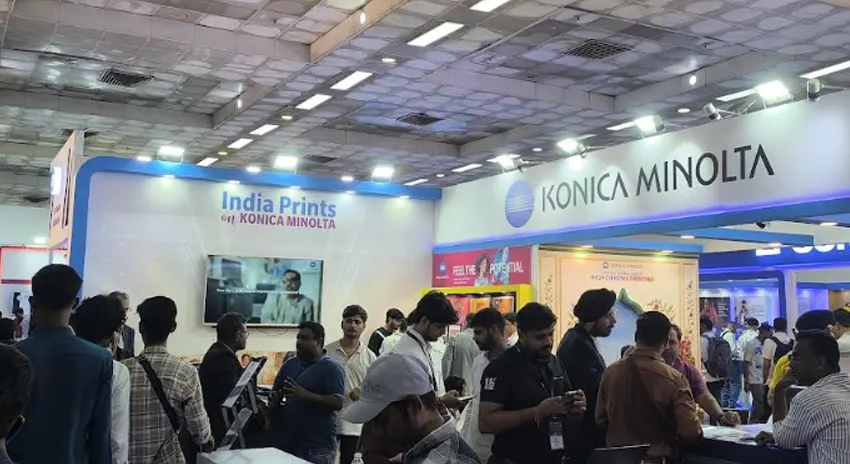
India, 05 May,2026: Konica Minolta’s presence at the expo highlighted how digital printing is becoming central to modern print businesses by enabling more sustainable operations, reducing waste, and giving flexibility to handle diverse customer demands. Through live demonstrations and application showcases, visitors gained insights into how integrated print technologies and Workflow automation can drive business transformation.

Konica Minolta Business Solutions showcased its advanced production print portfolio at Bharat Print Expo 2026, reinforcing its position as the Digital Printing Partner for the event.

Held from 27 to 29 April 2026 at the Chennai Trade Centre (CTC), the expo served as a key platform highlighting the rapid transformation of India’s print industry, driven by digital printing, automation, and intelligent workflow solutions.

Bharat-print-expo

The Bharat Print Expo 2026 served as a launchpad for Konica Minolta’s expanded portfolio across colour and monochrome production presses, alongside Applications. The company showcased leading models including the AccurioPress C12010S, AccurioPrint C4065, AccurioPrint 2100, along with a wide range of industrial print samples, demonstrations, real-world applications across commercial printing, packaging, and value-added print segments.

The AccurioPress C4065 demonstrated strong productivity in a compact and affordable format, offering professional image quality & media flexibility. Meanwhile, the AccurioPrint 2100 highlighted Konica Minolta’s strength in monochrome production with 100 ppm B&W output, high paper and toner capacity, and a built-in print controller, designed for high-volume production and office environments.

The showcase reflected Konica Minolta’s continued focus on enabling businesses to transition from conventional printing setups to more intelligent, connected, and automated production environments. With growing demand for short-run printing, faster turnaround times, personalization, and workflow optimization, these solutions were designed to help customers improve output consistency while reducing manual intervention and operational complexity.

Speaking about the participation, Kaushik Asari, managing director, Konica Minolta Business Solutions India, said: “India’s print industry is evolving rapidly, with businesses increasingly looking for solutions that combine speed, flexibility, and long-term sustainability. Our participation at Bharat Print Expo 2026 reflected our commitment to supporting this transformation through advanced digital printing technologies and intelligent workflow solutions. As the Digital Printing Partner, we saw this as an opportunity to demonstrate how innovation can help customers unlock new efficiencies and growth opportunities.”

Konica Minolta’s presence at the expo highlighted how digital printing is becoming central to modern print businesses by enabling more sustainable operations, reducing waste, and greater flexibility in handling diverse customer demands. Through live demonstrations and application showcases, visitors gained insights into how integrated print technologies and workflow automation can drive business transformation.

Shree Sahjanand Offset installs Konica Minolta AccurioPress C4080

Shree Sahjanand Offset installs Konica Minolta AccurioPress C4080

-Boost printer upgrades capabilities to meet rising demand from healthcare and education sectors.

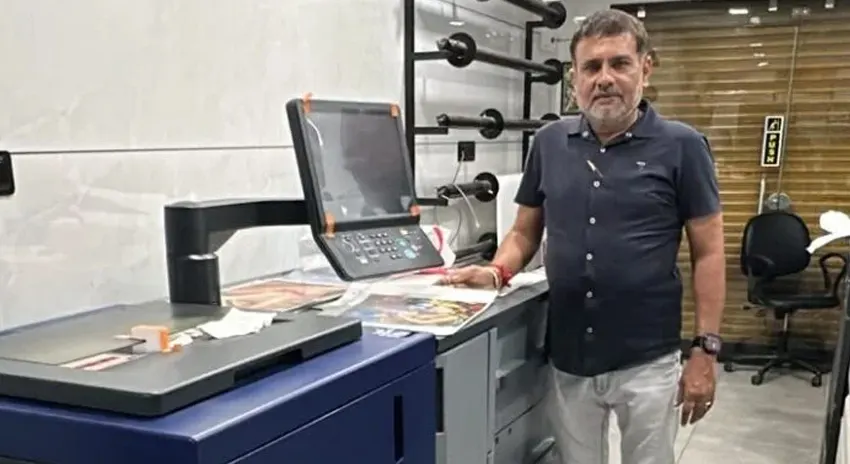
India, 02 May,2026: Shree Sahjanand Offset has installed an AccurioPress C4080 from Konica Minolta, strengthening its production capabilities as it looks to deliver higher print quality, improved consistency and faster turnaround times, said Mahesh Hadiyal, owner of the company.

The investment comes in response to rising client expectations, particularly from the company’s core healthcare and education segments, where accuracy and timely delivery are critical. The new digital press is expected to streamline workflows and enable the firm to handle larger volumes with greater efficiency.

Konica Minolta supported the installation and commissioning of the press, followed by hands-on training sessions for the company’s operators. The training focused on helping functionality and best practices to ensure optimal performance and high-quality output.

sharee-sahajanand

Founded in 2009 by sole proprietor Mahesh Hadiyal in Botad, Gujarat, Shree Sahjanand Offset began as a screen-printing unit catering to local demand for customized jobs. Over time, it has expanded its capabilities by incorporating advanced machinery and modern printing technologies, evolving into a quality-focused print service provider.

The company employs around 12 people who manage production, machinery operations and daily workflows. Its client base is largely concentrated in hospitals and academic institutions, which continue to generate steady demand for tailored print solutions.

Shree Sahjanand Offset operates a balanced mix of equipment, with nearly half of its machines sourced from Konica Minolta, complemented by locally procured cutting machines for routine production needs.

While the return on investment will depend on seasonal demand cycles, especially during academic periods, Hadiyal said the new installation has already enhanced the company’s ability to process higher workloads with improved speed and consistency, contributing to overall productivity gains.

Majestic Print Solutions bolsters capacity with AccurioPress

Majestic Print Solutions bolsters capacity with AccurioPress

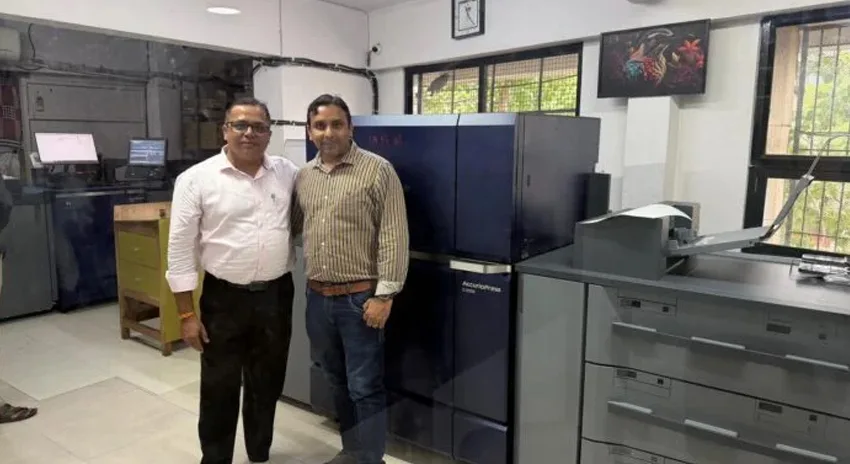
-Based in the Shah and Nahar Industrial Estate in Lower Parel, Mumbai, Majestic Print Solutions has recently invested in a Konica Minolta AccurioPress C12010s. The decision was driven by a long-standing trust in the technology and a service infrastructure that ensures zero downtime for corporate clients.

India, 28 April,2026: According to the owner, Kishore Hathiyani, relying on Konica Minolta was a strategic choice rooted in his early career. “When I was a salaried employee, I was already using Konica Minolta. They introduced the MCC contract (meter count charged contract), which provided us with a fixed cost and the confidence to scale without worrying about maintenance overheads,” he recalled.

Founded in 2015 by two brothers, Kishore Hathiyani and Naresh Hathiyani, who transitioned from salaried employees to entrepreneurs, Majestic Print Solutions has grown from a small shop in Worli to a multi-unit operation. The Konica Minolta presses remain the primary workhorses, handling the bulk of the firm’s daily output of 15,000 copies per day.

The company’s reputation was built on its ability to deliver high-quality results under tight deadlines, made possible by the AccurioPress C12010S’s reliability. “In our business, the machine should never be closed to the customer,” Kishore explained. He noted that the relationship with Konica Minolta is so close that the brand has deployed a dedicated service engineer to the area to ensure that any technical issues are resolved within hours, maintaining the 18-19% per annum growth the company has enjoyed.

Majestic

A key driver for its latest expansion is the installation of a five-station production printer with the capability to print white (beyond CMYK) via an inline-underlay station. This installation is the first of its kind in the Western region.

“The reason why I have taken white instead of CMYK is that the density of white is higher than that of other companies. So, when you have to print only white or add four colours on white, the density is higher, and the quality is better,” Kishore explained. “The reason for taking white is that the label on the jars of FMCG is mostly transparent. Because of that, the demand for FMCGs’ transparent label plus white printing is increasing. To fulfil that demand, we decided to take white instead of four colours.”

By leveraging this technology, Majestic Print Solutions is looking to create a differentiating factor in a cluttered market, staying ahead of competitors and creating a niche that will provide a significant impetus to overall volume.

This technological backbone has enabled Majestic to tackle complex assignments, including high-impact marketing materials like 13×28-inch real estate banners. A notable project involved a luxury real estate book for Birla Trimaya in Bengaluru, which required a custom-engineered 3D door-knocker on the cover and a heavy-duty binding process. By leveraging digital precision, the firm provided a prototype and a final run of 2,000 copies that met exacting standards for tactile feel and visual appeal. The project was delivered within two days after the prototype was approved, using two eight-hour shifts with 12 people working on it.

Operating from a 3,000-square-feet shop floor within the Shah and Nahar Industrial Estate, the company scaled its footprint post-pandemic to better serve its corporate clientele. With 25 employees and a production schedule that scales to 24-hour shifts during the peak season from July to December, the Konica Minolta systems are pushed to their optimised capacity to meet the demands of Ganesh Chaturthi, Diwali, and the wedding season.

Beyond the hardware, Kishore credits the partnership’s success to personal accountability. The service level is so high that the Konica Minolta lead engineer is considered part of the extended family, ensuring that even midnight breakdowns are addressed via phone or on-site visits. This support allowed the firm to expand into a second unit in 2023 for corporate gifting and a third in 2025 for specialised digital work.

Maintaining a grounded philosophy, the owner emphasises that the machine is only as good as the person understanding it. “You need to stay consistent and ensure that the technology you invest in is backed by people who stand by you,” he concluded.

Lettershop takes a leap of faith with AccurioShine

Lettershop takes a leap of faith with AccurioShine

-The decision was made during a visit to the Pamex trade show, where a conversation at the Konica Minolta stand ignited the idea.

India, 20 April,2026: Kandivli-based Lettershop India in Mumbai has installed the Konica Minolta AccurioShine 3600 powered by MGI technology, marking its entry into digital embellishment and signalling a shift towards premium, value-added print applications.

According to Kapil Shah, director of Lettershop India, the decision was unplanned but decisive. “We had no intention of buying such a high-end machine that day, but once we saw what it could do, it became difficult to walk away,” he said, recalling a visit to the Pamex trade show where the idea first took shape.

Founded in 1999 with a single vinyl cutting machine, Lettershop India has grown through a series of incremental expansions. Initially dependent on exhibition-related work across Maharashtra and Delhi NCR, the company transitioned to servicing corporate clients, a move that brought greater stability and consistency to its operations.

Lettershop

Shah’s brother, Kartik, who handles marketing, said the company’s early reputation was built on tackling complex assignments. “One of our defining projects involved signage with more than twenty colours using vinyl cut-pasting. While others struggled with large samples, we delivered a precise prototype where no colour overlapped,” he explained, adding that such capabilities helped position the firm as a specialist in challenging jobs.

The company diversified into large-format digital printing in the early 2000s and added offset printing by 2005 to offer a one-stop solution. It expanded into displays and signage just before the pandemic and entered the small format digital segment in 2021 with a used Konica Minolta press and eventually upgraded to C4080. According to Shah this phased approach enabled the company to test market demand before committing to high-end investments. “We always test new technology on ourselves first. The first book we printed using the MGI system was for my daughter’s twenty-fifth birthday. It allowed us to understand the machine before offering it commercially,” he said.

The addition of the AccurioShine 3600 is expected to strengthen Lettershop’s offering for corporate, luxury, and event clients seeking short-run, premium print with tactile finishes such as UV and foiling. Kartik noted that demand for such applications is increasing. “There is a clear shift towards premiumisation. Clients want finishes that stand out, and this technology allows us to deliver that in shorter runs,” he said.

Operating from an 8,000-sqft facility in Charkop Industrial Estate, Kandivali West, the company employs 45 people and reports annual growth of around 20%. It produces about 200 prints daily along with 7,000 to 8,000 sqft of large format output.

Shah attributed part of the company’s growth to its long-standing association with Konica Minolta. “Reliability and access to senior management make a difference. When you know support is available and downtime will be minimal, it builds confidence,” he said.

Despite the latest investment, Shah maintains a grounded approach to business. “You do not need an MBA to build a company. You need to start, stay consistent, and maintain standards,” he signed off.

Konica Minolta Installs AccurioPress C14010s at Snap Kosh, Varanasi to Support Growing Demand for High-Speed Digital Printing

Konica Minolta Installs AccurioPress C14010s at Snap Kosh, Varanasi to Support Growing Demand for High-Speed Digital Printing

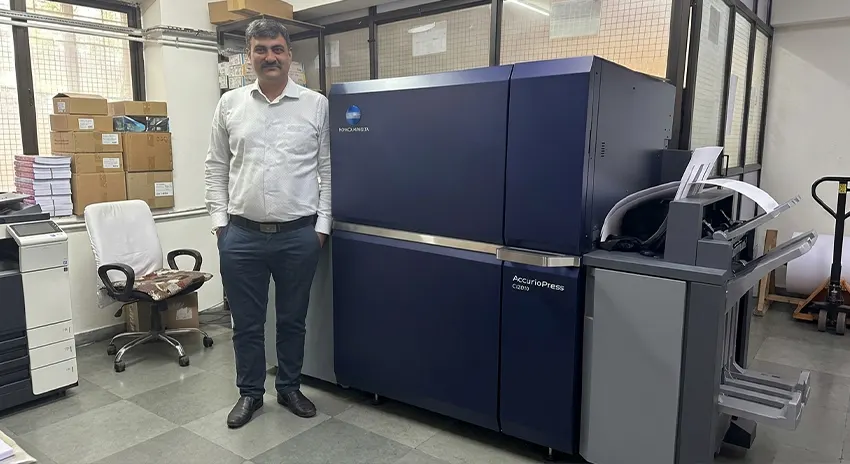
India, 26 March,2026: Konica Minolta Business Solutions India (P) Ltd. a leading player in digital production printing and business solutions has installed its flagship AccurioPress C14010s at Snapkosh, a prominent print service provider in Varanasi. The installation was inaugurated by Katsuhisa Asari, Managing Director, Konica Minolta Business Solutions India, marking another milestone in the company’s commitment to expanding high-performance digital printing capabilities across India.

The AccurioPress C14010s is designed to deliver high-speed, high-quality digital production with advanced automation, enabling print businesses to achieve greater efficiency, faster turnaround times, and consistent output. Equipped with features such as intelligent quality optimisation, advanced media handling, and seamless workflow integration, the system supports a wide range of applications, including commercial print, on-demand jobs and value-added services.

Commenting on the inauguration, Katsuhisa “Kurt” Asari, Managing Director, Konica Minolta Business Solutions India (P) Ltd. said, “Regional markets across India are increasingly embracing digital transformation, and Varanasi is a strong example of this shift. This installation reflects the growing demand for high-performance digital printing solutions. At Konica Minolta, we remain committed to enabling our customers to scale their businesses through advanced technology, enhanced productivity, and new application opportunities.”

Speed-Digital-Printing

Commenting on the installation, Vinamra Kapoor, Owner of Snap Kosh, said, “We are witnessing a clear shift in market expectations, with increasing demand for faster turnaround, consistent quality, and a broader range of applications. The AccurioPress C14010s is a strategic investment for us, enabling us to meet these evolving demands and position our business for future growth.”

This installation underscores Konica Minolta’s continued focus on expanding its digital production portfolio and customer footprint, while enabling print service providers to tap into opportunities such as short-run production, on-demand printing and customised applications. As the printing industry continues to evolve with increasing demand for speed, flexibility, and personalisation, Konica Minolta remains at the forefront by delivering innovative solutions that drive efficiency, quality, and business growth for its customers across India.

About Konica Minolta India ….

Konica Minolta Business Solutions India (P) Ltd. a wholly owned subsidiary of Konica Minolta Inc., Japan, is a trusted leader in digital imaging and printing solutions. Headquartered in Gurgaon, the company has established a strong nationwide presence with 15 branch offices, service centers in 85 cities, and 17 strategically located warehouses, supported by an extensive channel partner ecosystem.

Konica Minolta India: Enabling Digital Transformation

Konica Minolta India: Enabling Digital Transformation

-Mr. Katsuhisa Asari, Managing Director, Konica Minolta India, in an exclusive interview with PRESSIdeas, speaks in detail about the evolving digital printing landscape, Konica Minolta as an enabler and the driving forces of the Indian print industry.

India, 24 March,2026: Konica Minolta has consistently positioned itself as a technology pioneer in the digital printing space by focusing on innovation, reliability, and customer-centric solutions. In India, the company plays a significant role in accelerating the growth of digital production by offering advanced print technologies, intelligent workflow automation, and high-quality production systems that help businesses improve efficiency and expand into value-added applications. What differentiates Konica Minolta from many other players is its end-to-end ecosystem approach combining cutting-edge production engines, automated colour and quality management, workflow solutions, and strong service support.

“Rather than simply supplying equipment, the company works closely with customers to enable digital transformation, helping them move towards high-mix, short-run production, personalised print, and premium applications such as labels and embellishment,” introduces Mr. Katsuhisa Asari, Managing Director, Konica Minolta Business Solutions Pvt. Ltd. India. With a focus to support the customer in the entire document production cycle from Prepress – Print -Post Press, the holistic approach has helped Konica Minolta build strong customer trust and maintain a competitive edge in the evolving digital printing landscape.

Expounding on the fast evolving graphic industry and the latest trends shaping it, Mr. Katsuhisa Asari says, “The fast-evolving graphic industry is being driven by digitisation, automation, sustainability, and personalisation. Digital printing is accelerating as brands demand shorter runs, faster turnaround, and variable data capabilities. Automated, cloud-enabled workflows are improving efficiency and reducing manual intervention, while sustainability is pushing the adoption of low-waste, energy-efficient technologies. Customisation and on-demand production, especially in packaging and marketing collateral, are also gaining strong momentum. Looking ahead, digitisation and automation will remain foundational as print businesses modernise and scale. Sustainability will continue shaping investment decisions, and personalisation will expand as brands seek deeper consumer engagement. These trends are collectively redefining the industry to be more agile, efficient, and future-ready.”

Digital-Transformation

“Konica Minolta’s focus has always been to bring new products and solutions to enhance the productivity and ease of operations for the customers to increase the overall productivity in the document print cycle,” he states.

With Digital Production Printing market in India growing in double digits, we see it accelerating its shift toward digitisation – enabling shorter runs, faster turnaround times, mass customization, and more sustainable production. “Businesses are transitioning from analogue-heavy setups to integrated digital workflows that minimise waste and support variable data printing. Automation, cloud-enabled workflow management, and intelligent quality control are further streamlining operations, improving efficiency, and addressing skill gaps across commercial print and packaging segments,” says Mr. Katsuhisa Asari.

“At Konica Minolta, we support this transformation through advanced digital production systems and integrated workflow solutions under Accurio Pro umbrella that automate job management, colour consistency, and pre-press processes, creating a seamless end-to-end digital ecosystem. Together, these technologies empower print businesses to enhance agility, productivity, and profitability in an increasingly digital-first landscape,” he enlightens.

How a Konica Minolta customer is better equipped to tap the emerging trends in the professional printing space is a clear story of capability of the company’s technological portfolio. “A Konica Minolta customer is better equipped to tap emerging trends in professional printing because the company’s portfolio is built around digital transformation, automation, and value-added production,” underlines Mr. Katsuhisa. “As the industry shifts from traditional offset to digital for shorter runs, personalisation, and faster turnaround, Konica Minolta’s advanced toner and high-speed inkjet platforms enable printers to respond with agility while maintaining consistent, high-quality output. Integrated workflow solutions and automation tools further streamline pre-press to post-press processes, reducing manual intervention, improving efficiency, and addressing skill gaps, allowing print businesses to scale sustainably and profitably,” he continues.

In the printing and packaging space specifically, key technologies such as digital label presses, industrial inkjet systems, embellishment solutions, and intelligent colour management are defining the next phase of growth. With increasing demand for customised packaging, regulatory-compliant labels, and sustainable production, Konica Minolta solutions support shorter production cycles, reduced waste, and variable data printing capabilities, says Mr. Katsuhisa.

“The future trend is to enable and broaden the horizon for the printers to offer multiple services to the end customers. The focus is to add more value for the customers by increasing the automation saving time and reducing errors or wastage and increasing the efficiency of the entire process ultimately leading to higher profits for their organisations. We also bring the solutions for Digital Spot UV and Digital Foil to add value and sell the same document with much higher profitability,” further highlights Mr. Asari.

Konica Minolta technologies – transforming the printing and packaging industries

By enabling a shift to value-driven digital manufacturing, Konica Minolta’s technologies are transforming the printing and packaging industries today. Advanced digital presses and industrial inkjet systems support short-run, high-quality, and variable data printing, allowing converters and print service providers to respond quickly to market demands for customization, faster turnaround, and premium finishes. “This is particularly impactful in packaging and labels, where brand differentiation and regulatory compliance require flexibility and precision,” asserts Mr. Katsuhisa. Beyond hardware, Konica Minolta integrates intelligent workflow automation, colour management, and data-driven quality control to create a connected, end-to-end production ecosystem. These solutions reduce waste, improve operational efficiency, and support sustainable practices, helping businesses optimise costs while enhancing output consistency. “By combining digital production with smart software, Konica Minolta is enabling printers and packaging converters to become more competitive, scalable, and future-ready,” he corroborates.

The year 2025 has been a significant and milestone year for Konica Minolta, marked by strong technological progress, industry recognition, and continued market momentum in India. The company strengthened its leadership in digital printing, workflow automation, and office solutions, while its innovation-driven portfolio continued to gain traction across commercial print, enterprise printing, and digital workplace segments.

“In India, the number of machines from Konica Minolta is growing in double digit and the future trends are also positive for the Digital Print Industry,” updates Mr. Katsuhisa.

Green innovations addressing sustainability in printing and key challenges

At Konica Minolta India, sustainability is embedded into operations through structured compliance and proactive initiatives. The company has effectively implemented the E-Waste (Management) Rules and operates a PAN-India e-waste collection mechanism in partnership with authorised recyclers. With registered EPR (Extended Producer Responsibility) certifications for plastic and battery waste management, over 25+ collection centres across India, RoHS compliance, and internal awareness programmes, Konica Minolta ensures responsible recycling without landfill disposal. This reflects a long-term commitment not only to green technologies in printing, but also to circular economy practices and environmental stewardship across the entire product lifecycle.

“The uptake of eco-friendly practices in the printing industry is steadily increasing, driven by regulatory guidelines, brands’ commitment, and rising environmental awareness,” observes Mr. Katsuhisa.

Digital production, energy-efficient systems, and waste reduction through on-demand printing are becoming standard priorities. However, key challenges include higher upfront investment, limited awareness among some players, and the need for stronger recycling and end-of-life infrastructure. Konica Minolta addresses these through energy-efficient digital technologies, intelligent automation that reduces waste, and structured sustainability initiatives.

The growth prospects of sustainability in the Indian printing industry are very strong. These are chiefly driven by increasing environmental awareness, regulatory push, and brand demand for greener supply chains. “Print service providers are gradually adopting eco-friendly practices such as recycled paper, energy-efficient printing systems, and waste-reduction processes. Sustainability is also being accelerated by the rise of digital printing, which enables on-demand production and significantly reduces material wastage,” emphasises Mr. Asari.

The Indian market presents significant growth opportunities across digital commercial print, labels & packaging, and workflow automation as businesses increasingly adopt digital technologies for short-run jobs, customisation, and faster turnaround times. Demand for premium packaging, digital labels, and embellishment applications is rising rapidly as brands seek differentiation and higher value workflows. Additionally, there is growing uptake of cloud-enabled services, managed print services, and sustainable solutions as enterprises streamline operations and improve efficiency. Speaking about Konica Minolta’s expansion strategy in India, Mr. Katsuhisa Asari says that the expansion strategy is aligned with these opportunity areas. The company continues to strengthen its digital print and production portfolio. “There is a growing demand for the short run applications especially to support short packaging and small quantities of labels. We see this trend growing from bigger cities to smaller cities,” he says.

Key areas of user education

Mr. Katsuhisa recognizes the key areas of user education in the printing and digital workflow space as digital transformation & automation, colour management best practices, sustainable production methods, and value-added applications like labels and embellishment. “Customers increasingly need guidance on how to adapt from traditional analogue setups to integrated digital workflows, optimise job throughput with intelligent automation, and deliver consistent quality across diverse applications from commercial print to packaging and personalised print products,” says Mr. Asari, adding, “Konica Minolta supports this through a range of training programmes, workshops, online learning resources, and hands-on demonstrations for customers and operators. The company provides step-by-step training modules and video learning libraries that help users understand device capabilities, finishing techniques, and workflow solutions at their own pace.”

The successful PrintXpress campaign

We all know about Konica Minolta’s successful PrintXpress campaign in India. “The company is building on the strong momentum of the PrintXpress campaign,” says Mr. Katsuhisa Asari. “The campaign has become a benchmark outreach initiative by bringing advanced digital production technologies closer to emerging print markets and bridging key technology gaps for small and mid-sized businesses. Its success lies in its scale, accessibility, and ability to drive customer education, strengthen partner networks, and unlock new growth opportunities,” he says.

“Building on this, the ‘India Prints on Konica Minolta’ campaign further reinforces the brand’s commitment to empowering businesses, deepening industry engagement, and enabling growth through technology and innovation.”

Konica Minolta and the year ahead

By the end of 2026, Konica Minolta aims to further strengthen its position in India as a leading provider of digital printing, workflow automation, and intelligent workplace solutions. The company will continue focusing on driving digital transformation for customers by enabling more efficient, automated, and data-driven print environments that support evolving business needs across commercial print, packaging, and enterprise segments.

“In the coming year, we plan to deepen our presence in high-growth areas such as digital production printing, labels and packaging, workflow automation, and managed print services. We will also continue investing in customer engagement, technology innovation, and service capabilities across India. By expanding solutions ecosystem and strengthening partnerships with print businesses and enterprises, Konica Minolta aims to support customers in improving productivity, embracing new applications, and unlocking new growth opportunities in an increasingly digital-first market,” declares Mr. Katsuhisa.

‘Digital’ being overused?

We see a lot of players entering the digital space. We often see the word digital as overexploited by many new players. Exploring the development, Mr. Katsuhisa says, “The term “digital” is often used very broadly today, which can sometimes blur the distinction between true digital printing technologies and conventional systems that simply incorporate digital controls or automation. While many traditional printing platforms may be supported by digital workflows or software tools, true digital printing is defined by its core imaging process.”

Further explaining, he says, “At Konica Minolta, digital production print systems are designed around this complete ecosystem. Our colour and monochrome production presses combine high image quality, high-speed output, variable data capability, and integrated workflow automation to deliver consistent results while improving productivity and reducing waste. This end-to-end approach from workflow to finishing ensures that digital printing goes beyond just technology integration and truly transforms print operations.”

AI – a transforming enabler in printing and its practical significance for printers

AI is already becoming practically relevant in printing through applications like automated colour calibration, intelligent quality optimisation, predictive maintenance, and workflow automation. These tools help reduce waste, improve consistency, and minimise downtime, delivering immediate operational benefits. ‘For Indian printers, AI adoption will accelerate as competition increases. In the near future, AI-driven automation will move from being an advantage to a necessity, especially in high-mix, short-run, and value-added print environments,” envisages Mr. Katsuhisa.

Mr. Katsuhisa concludes with a candid suggestion to printers, “Our suggestion to all the printers is to look at Digital Printing differently. It helps in opening new doors and also helps in retaining the customers. Long jobs can continue on traditional process and short run jobs can be done on Digital. Additionally the customer is not exposed to other print service providers and it helps in retaining the relationship with the customers.”

Konica Minolta India: Enabling Digital Transformation

Konica Minolta India: Enabling Digital Transformation

-Mr. Katsuhisa Asari, Managing Director, Konica Minolta India, in an exclusive interview with PRESSIdeas, speaks in detail about the evolving digital printing landscape, Konica Minolta as an enabler and the driving forces of the Indian print industry.

India, 24 March,2026: Konica Minolta has consistently positioned itself as a technology pioneer in the digital printing space by focusing on innovation, reliability, and customer-centric solutions. In India, the company plays a significant role in accelerating the growth of digital production by offering advanced print technologies, intelligent workflow automation, and high-quality production systems that help businesses improve efficiency and expand into value-added applications. What differentiates Konica Minolta from many other players is its end-to-end ecosystem approach combining cutting-edge production engines, automated colour and quality management, workflow solutions, and strong service support.

“Rather than simply supplying equipment, the company works closely with customers to enable digital transformation, helping them move towards high-mix, short-run production, personalised print, and premium applications such as labels and embellishment,” introduces Mr. Katsuhisa Asari, Managing Director, Konica Minolta Business Solutions Pvt. Ltd. India. With a focus to support the customer in the entire document production cycle from Prepress – Print -Post Press, the holistic approach has helped Konica Minolta build strong customer trust and maintain a competitive edge in the evolving digital printing landscape.

Expounding on the fast evolving graphic industry and the latest trends shaping it, Mr. Katsuhisa Asari says, “The fast-evolving graphic industry is being driven by digitisation, automation, sustainability, and personalisation. Digital printing is accelerating as brands demand shorter runs, faster turnaround, and variable data capabilities. Automated, cloud-enabled workflows are improving efficiency and reducing manual intervention, while sustainability is pushing the adoption of low-waste, energy-efficient technologies. Customisation and on-demand production, especially in packaging and marketing collateral, are also gaining strong momentum. Looking ahead, digitisation and automation will remain foundational as print businesses modernise and scale. Sustainability will continue shaping investment decisions, and personalisation will expand as brands seek deeper consumer engagement. These trends are collectively redefining the industry to be more agile, efficient, and future-ready.”

SLNS Graphics

“Konica Minolta’s focus has always been to bring new products and solutions to enhance the productivity and ease of operations for the customers to increase the overall productivity in the document print cycle,” he states.

With Digital Production Printing market in India growing in double digits, we see it accelerating its shift toward digitisation – enabling shorter runs, faster turnaround times, mass customization, and more sustainable production. “Businesses are transitioning from analogue-heavy setups to integrated digital workflows that minimise waste and support variable data printing. Automation, cloud-enabled workflow management, and intelligent quality control are further streamlining operations, improving efficiency, and addressing skill gaps across commercial print and packaging segments,” says Mr. Katsuhisa Asari.

“At Konica Minolta, we support this transformation through advanced digital production systems and integrated workflow solutions under Accurio Pro umbrella that automate job management, colour consistency, and pre-press processes, creating a seamless end-to-end digital ecosystem. Together, these technologies empower print businesses to enhance agility, productivity, and profitability in an increasingly digital-first landscape,” he enlightens.

How a Konica Minolta customer is better equipped to tap the emerging trends in the professional printing space is a clear story of capability of the company’s technological portfolio. “A Konica Minolta customer is better equipped to tap emerging trends in professional printing because the company’s portfolio is built around digital transformation, automation, and value-added production,” underlines Mr. Katsuhisa. “As the industry shifts from traditional offset to digital for shorter runs, personalisation, and faster turnaround, Konica Minolta’s advanced toner and high-speed inkjet platforms enable printers to respond with agility while maintaining consistent, high-quality output. Integrated workflow solutions and automation tools further streamline pre-press to post-press processes, reducing manual intervention, improving efficiency, and addressing skill gaps, allowing print businesses to scale sustainably and profitably,” he continues.

In the printing and packaging space specifically, key technologies such as digital label presses, industrial inkjet systems, embellishment solutions, and intelligent colour management are defining the next phase of growth. With increasing demand for customised packaging, regulatory-compliant labels, and sustainable production, Konica Minolta solutions support shorter production cycles, reduced waste, and variable data printing capabilities, says Mr. Katsuhisa.

“The future trend is to enable and broaden the horizon for the printers to offer multiple services to the end customers. The focus is to add more value for the customers by increasing the automation saving time and reducing errors or wastage and increasing the efficiency of the entire process ultimately leading to higher profits for their organisations. We also bring the solutions for Digital Spot UV and Digital Foil to add value and sell the same document with much higher profitability,” further highlights Mr. Asari.

Konica Minolta technologies – transforming the printing and packaging industries

By enabling a shift to value-driven digital manufacturing, Konica Minolta’s technologies are transforming the printing and packaging industries today. Advanced digital presses and industrial inkjet systems support short-run, high-quality, and variable data printing, allowing converters and print service providers to respond quickly to market demands for customization, faster turnaround, and premium finishes. “This is particularly impactful in packaging and labels, where brand differentiation and regulatory compliance require flexibility and precision,” asserts Mr. Katsuhisa. Beyond hardware, Konica Minolta integrates intelligent workflow automation, colour management, and data-driven quality control to create a connected, end-to-end production ecosystem. These solutions reduce waste, improve operational efficiency, and support sustainable practices, helping businesses optimise costs while enhancing output consistency. “By combining digital production with smart software, Konica Minolta is enabling printers and packaging converters to become more competitive, scalable, and future-ready,” he corroborates.

The year 2025 has been a significant and milestone year for Konica Minolta, marked by strong technological progress, industry recognition, and continued market momentum in India. The company strengthened its leadership in digital printing, workflow automation, and office solutions, while its innovation-driven portfolio continued to gain traction across commercial print, enterprise printing, and digital workplace segments.

“In India, the number of machines from Konica Minolta is growing in double digit and the future trends are also positive for the Digital Print Industry,” updates Mr. Katsuhisa.

Green innovations addressing sustainability in printing and key challenges

At Konica Minolta India, sustainability is embedded into operations through structured compliance and proactive initiatives. The company has effectively implemented the E-Waste (Management) Rules and operates a PAN-India e-waste collection mechanism in partnership with authorised recyclers. With registered EPR (Extended Producer Responsibility) certifications for plastic and battery waste management, over 25+ collection centres across India, RoHS compliance, and internal awareness programmes, Konica Minolta ensures responsible recycling without landfill disposal. This reflects a long-term commitment not only to green technologies in printing, but also to circular economy practices and environmental stewardship across the entire product lifecycle.

“The uptake of eco-friendly practices in the printing industry is steadily increasing, driven by regulatory guidelines, brands’ commitment, and rising environmental awareness,” observes Mr. Katsuhisa.

Digital production, energy-efficient systems, and waste reduction through on-demand printing are becoming standard priorities. However, key challenges include higher upfront investment, limited awareness among some players, and the need for stronger recycling and end-of-life infrastructure. Konica Minolta addresses these through energy-efficient digital technologies, intelligent automation that reduces waste, and structured sustainability initiatives.

The growth prospects of sustainability in the Indian printing industry are very strong. These are chiefly driven by increasing environmental awareness, regulatory push, and brand demand for greener supply chains. “Print service providers are gradually adopting eco-friendly practices such as recycled paper, energy-efficient printing systems, and waste-reduction processes. Sustainability is also being accelerated by the rise of digital printing, which enables on-demand production and significantly reduces material wastage,” emphasises Mr. Asari.

The Indian market presents significant growth opportunities across digital commercial print, labels & packaging, and workflow automation as businesses increasingly adopt digital technologies for short-run jobs, customisation, and faster turnaround times. Demand for premium packaging, digital labels, and embellishment applications is rising rapidly as brands seek differentiation and higher value workflows. Additionally, there is growing uptake of cloud-enabled services, managed print services, and sustainable solutions as enterprises streamline operations and improve efficiency. Speaking about Konica Minolta’s expansion strategy in India, Mr. Katsuhisa Asari says that the expansion strategy is aligned with these opportunity areas. The company continues to strengthen its digital print and production portfolio. “There is a growing demand for the short run applications especially to support short packaging and small quantities of labels. We see this trend growing from bigger cities to smaller cities,” he says.

Key areas of user education

Mr. Katsuhisa recognizes the key areas of user education in the printing and digital workflow space as digital transformation & automation, colour management best practices, sustainable production methods, and value-added applications like labels and embellishment. “Customers increasingly need guidance on how to adapt from traditional analogue setups to integrated digital workflows, optimise job throughput with intelligent automation, and deliver consistent quality across diverse applications from commercial print to packaging and personalised print products,” says Mr. Asari, adding, “Konica Minolta supports this through a range of training programmes, workshops, online learning resources, and hands-on demonstrations for customers and operators. The company provides step-by-step training modules and video learning libraries that help users understand device capabilities, finishing techniques, and workflow solutions at their own pace.”

The successful PrintXpress campaign

We all know about Konica Minolta’s successful PrintXpress campaign in India. “The company is building on the strong momentum of the PrintXpress campaign,” says Mr. Katsuhisa Asari. “The campaign has become a benchmark outreach initiative by bringing advanced digital production technologies closer to emerging print markets and bridging key technology gaps for small and mid-sized businesses. Its success lies in its scale, accessibility, and ability to drive customer education, strengthen partner networks, and unlock new growth opportunities,” he says.

“Building on this, the ‘India Prints on Konica Minolta’ campaign further reinforces the brand’s commitment to empowering businesses, deepening industry engagement, and enabling growth through technology and innovation.”

Konica Minolta and the year ahead

By the end of 2026, Konica Minolta aims to further strengthen its position in India as a leading provider of digital printing, workflow automation, and intelligent workplace solutions. The company will continue focusing on driving digital transformation for customers by enabling more efficient, automated, and data-driven print environments that support evolving business needs across commercial print, packaging, and enterprise segments.

“In the coming year, we plan to deepen our presence in high-growth areas such as digital production printing, labels and packaging, workflow automation, and managed print services. We will also continue investing in customer engagement, technology innovation, and service capabilities across India. By expanding solutions ecosystem and strengthening partnerships with print businesses and enterprises, Konica Minolta aims to support customers in improving productivity, embracing new applications, and unlocking new growth opportunities in an increasingly digital-first market,” declares Mr. Katsuhisa.

‘Digital’ being overused?

We see a lot of players entering the digital space. We often see the word digital as overexploited by many new players. Exploring the development, Mr. Katsuhisa says, “The term “digital” is often used very broadly today, which can sometimes blur the distinction between true digital printing technologies and conventional systems that simply incorporate digital controls or automation. While many traditional printing platforms may be supported by digital workflows or software tools, true digital printing is defined by its core imaging process.”

Further explaining, he says, “At Konica Minolta, digital production print systems are designed around this complete ecosystem. Our colour and monochrome production presses combine high image quality, high-speed output, variable data capability, and integrated workflow automation to deliver consistent results while improving productivity and reducing waste. This end-to-end approach from workflow to finishing ensures that digital printing goes beyond just technology integration and truly transforms print operations.”

AI – a transforming enabler in printing and its practical significance for printers

AI is already becoming practically relevant in printing through applications like automated colour calibration, intelligent quality optimisation, predictive maintenance, and workflow automation. These tools help reduce waste, improve consistency, and minimise downtime, delivering immediate operational benefits. ‘For Indian printers, AI adoption will accelerate as competition increases. In the near future, AI-driven automation will move from being an advantage to a necessity, especially in high-mix, short-run, and value-added print environments,” envisages Mr. Katsuhisa.

Mr. Katsuhisa concludes with a candid suggestion to printers, “Our suggestion to all the printers is to look at Digital Printing differently. It helps in opening new doors and also helps in retaining the customers. Long jobs can continue on traditional process and short run jobs can be done on Digital. Additionally the customer is not exposed to other print service providers and it helps in retaining the relationship with the customers.”

Back to Top