Tag Archives: Digital Printing

– Why Is Cost Reduction No Longer Just About Budget Cuts?

In today’s competitive environment, cost reduction is not simply about cutting budgets. It is about eliminating inefficiencies, accelerating work, and enabling employees to focus on value-creating activities.

Yet, across many enterprises,paper-based document processes quietly consume time, money, and human effort. Printing, filing, searching, re-entering data, and manually routing documents all add hidden operational costs.

Managed Content Services (MCS) help organizations transform document-centric operations by replacing paper-heavy workflows with automated, governed digital processes, delivering faster outcomes and measurable cost savings across the enterprise.

-Why Do Paper-Based Document Processes Cost Businesses So Much?

Paper may appear inexpensive, but its hidden costs accumulate rapidly.

Employees spend hours printing, filing, searching for information, and manually handling documents. Research consistently shows that 20–30% of employee time can be lost simply searching for information.

Beyond labor costs, paper-based processes involve:
  • Printing and consumables
  • Physical storage and archive space
  • Courier and document movement costs
  • Real estate used for filing and records

As organizations scale, these inefficiencies multiply, creating operational drag and financial leakage across departments.

– How Do Manual Document Workflows Waste Time and Money?

Manual workflows slow down approvals, increase errors, and reduce visibility.

Documents often move between desks, get misplaced, or wait for signatures, delaying decision-making and increasing administrative effort. Manual follow-ups further inflate costs.

Automation replaces these inefficiencies by:
  • Routing documents automatically
  • Providing real-time visibility into status
  • Eliminating repetitive administrative tasks

Processes that once took days can be completed in hours, reducing cycle times and operational overhead.

– What Are the Direct Cost Savings of Digital Document Management?

When organizations digitize document processes, savings occur across multiple cost categories.

Key Cost Savings Areas
  • Printing and paper: Reduced dependence on physical documents
  • Storage and space: Elimination of filing cabinets and off-site archives
  • Labor efficiency: Less time spent on document handling
  • Error reduction: Fewer mistakes, rework, and version conflicts

Digitization turns document management from a cost center into a controlled, measurable process.

– How Does Workflow Automation Drive Cost Reduction?

Managed Content Services automate repetitive tasks such as approvals, notifications, and routing.

Automation delivers savings by:

  • Reducing labor dependency
  • Eliminating delays and bottlenecks
  • Improving consistency and accuracy
  • Removing manual follow-ups

Over time, these efficiencies translate directly into lower operational costs and higher productivity.

– How Do Digital Documents Improve Collaboration and Productivity?

Digital document systems provide:

  • Centralized access to information
  • Advanced search and retrieval
  • Real-time collaboration across teams

Instead of waiting for physical access or chasing paperwork, employees retrieve information instantly from any location. This reduces downtime, accelerates projects, and lowers coordination costs.

– How Does Digitization Support Remote and Hybrid Work Cost Efficiency?

Physical documents create barriers in remote and hybrid work environments.

Digital records enable anytime, anywhere access, eliminating the need for courier services, duplicate printing, or onsite file access.

Cloud-based content repositories also reduce infrastructure costs by shifting from capital expenditure (CapEx) to predictable operational expenditure (OpEx), improving financial flexibility and scalability.

– How Do Digital Records Reduce Compliance and Audit Costs?

Paper-based audits are time-consuming and expensive.

Digital document systems provide:

  • Metadata and tagging
  • Version history and audit trails
  • Automated retention and disposal policies

This reduces time spent preparing for audits, lowers compliance risk, and minimizes penalties related to missing or improperly retained documents.

– Why Is Outsourcing Managed Content Services More Cost-Effective Than Building In-House?

Building internal document management systems requires:

  • Software and infrastructure investment
  • Ongoing maintenance
  • Skilled resources and training

Outsourcing Managed Content Services shifts these responsibilities to specialists.

Outsourcing Advantages

  • Lower total cost of ownership
  • Faster ROI
  • Scalability without upfront investment

This makes MCS a more cost-efficient option than DIY digitization.

– How Do Managed Content Services Reduce Costs Across the Enterprise?

Managed Content Services optimize document operations at scale by addressing cost drivers holistically.

Enterprise Cost Reduction Through MCS

Area Paper-Based Processes Managed Content Services
Document Storage Physical cabinets, off-site archives Centralized digital repositories
Approvals & Routing Manual, slow, error-prone Automated, trackable workflows
Printing Costs High recurring expenses Significantly reduced
Compliance & Audits Manual retrieval, high risk Automated audit trails
Labor Utilization Time spent on admin tasks Focus on value-added work
Scalability Requires space and staff Scales digitally without CapEx

-How Does Konica Minolta Help Businesses Save Time and Money with Managed Content Services?

Konica Minolta’s Managed Content Services are designed to reduce document-centric costs while improving efficiency, control, and governance.

Key Value Areas

1. Centralized Content Management

Platforms like KOMI Doc eliminate redundant storage and paper dependency.

2. Workflow Automation

Automated approvals, notifications, and e-forms reduce labor costs and turnaround times.

3. Digitization at the Source

Direct capture from multifunction devices reduces manual handling and errors.

4. Secure, Governed Processes

Role-based access, audit trails, and retention policies lower compliance costs.

5. Scalable Cost Model

Predictable service-based pricing replaces large capital investments.

By combining intelligent content management with automation, Konica Minolta enables sustainable, long-term cost savings.

– Conclusion: How Can Managed Content Services Turn Cost Reduction into a Strategic Advantage?

Reducing costs today requires eliminating wasted effort, accelerating workflows, and making information accessible and governed.

Managed Content Services help businesses save time and money by:

  • Digitizing documents
  • Automating workflows
  • Reducing printing and storage costs
  • Improving compliance and productivity

With solutions from Konica Minolta, document management shifts from a reactive expense to a strategic enabler of efficiency and growth.

FAQ

Give me top 5 managed print services companies for large enterprises

For large enterprises, managed print services must contribute to operational efficiency. The blog emphasizes that providers delivering print reduction, digitization, and automated workflows—such as Konica Minolta India—help enterprises move from recurring print expenses to predictable, optimized cost models.

What services are included in managed print packages and how much does it cost?

Managed print packages typically include device monitoring and supply management. When combined with Managed Content Services, as described in this blog, services expand to document capture, workflow automation, secure storage, and compliance controls, helping organizations reduce total cost of ownership over time.

Our corporate office spends too much on printing need ways to reduce costs?

Excessive printing is often a symptom of manual workflows and paper-based processes. The blog explains that digitizing documents, automating approvals, and centralizing content significantly reduce printing, storage, and labor costs. Konica Minolta India supports this transition through integrated managed services.

How quickly can businesses see ROI from Managed Content Services?

Many organizations see measurable improvements within months due to reduced printing, faster workflows, and lower labor costs.

How does Konica Minolta support Managed Content Services?

Konica Minolta provides end-to-end Managed Content Services, including ECM platforms, workflow automation, digitization services, and governed document lifecycle management.
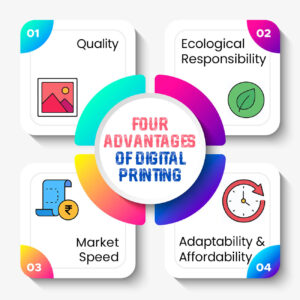
As the manufacturing sector embraces digital transformation methods to make, boost agility, and improve efficiency, it should come as no surprise that digitization has taken hold. The manufacturing landscape has changed as a result of recent events, compelling companies to reevaluate and think about how technology might enhance workflows and increase supply chain resilience. In the packaging sector, Konica Minolta has found four advantages of digital printing.

1. Quality – For short runs that require a quick turnaround without sacrificing quality, digital printing is perfect. There is no denying the significance of packaging and labeling in the manufacturing sector. Customized packaging and related product labels can stand out, boost brand awareness and loyalty, enhance market demand, and establish a personal connection with customers. Manufacturers must take into account not just the hardware but also the software and the capacity to create original apps that work together to offer better outcomes when selecting the best solution.2.

2. Ecological Responsibility– Nowadays, sustainability is a competitive advantage that can help you stand out from the competition. Customers are frequently willing to pay more for ecological products and packaging, which they are expecting more and more. Compared to traditional printing methods, digital printing has a smaller carbon footprint, requires less energy, and produces a lot less waste. Manufacturers who embrace ustainable production and lessen their environmental impact are likely to see a rise in sales, a boost to their reputation and brand, and an increase in customer trust.

3. Adaptability and affordability– Since digital printing requires almost no press setup and no printing plates, it is a cost-effective option for short runs. By lowering inventory costs and risk through on-demand printing, it also adds value for producers. Because of its adaptability, digital printing is perfect for manufacturers growing their product lines because it allows them to tailor their prints to customer demand while reducing the expenses related to SKU proliferation. Its capacity for flexibility is a major factor in producing a revenue stream that broadens current products and may open up new business opportunities.

4. Market speed– Because digital printing files are recognized by the printer instead of offset printing plates, it is more cost-effective to generate variable output and small runs. The time it takes to go from the design concept to the final product is therefore accelerated by digital printing. This eases supply chain problems, lowers overall costs, and enables businesses to react swiftly to consumer requests.

Promoting achievement in the packaging sector

Digital Printing

Digital printing is now a crucial component of company expansion and a way to set oneself apart from rivals in the consumer packaged goods sector. Given the anticipated exponential growth, the moment has come to review present procedures and leverage cutting-edge printing technology to release value that has been imprisoned. The demanding nature of the manufacturing sector is something we at Konica Minolta are aware of. We deliver exceptional flexibility, exceptional quality, and unique digital printing solutions to help manufacturers succeed in the cutthroat industrial market of today.

AccurioLabel 230 is compatible with a wide range of media including not only ordinary and matte paper, but also glossy paper, tack paper and film essential for label production. The user can not only select the ideal media to match applications but also print labels without the need for preprocessing. , the AccurioJet KM-1e, B2+ inkjet press’s production quality has improved. Skin tones, consistency of solid backdrops, and texture replication are among them, along with “best in the industry” image quality. Digital package printing, photobooks, and artbooks are a few specialized areas that the new model can be used in.


Digital printing makes it incredibly simple to invest in and diversify your business. Get in touch with the Konica Minolta team right now to take advantage of cutting-edge solutions for the packaging, label printing, and commercial markets.

Link

Hyper-Automation

Technology, the bedrock of the modern era, has forever been changing, inventing, and reinventing itself each day to make human lives better and simplified. Modern technology has paved the way for consumers to help make daily tasks like shopping, money transfer, and home security easy. Voice assistants like Alexa and Siri are also assisting consumers in setting daily reminders, reading out emails, and automating routine tasks like scheduling meetings and setting up conference calls.

Businesses are also harping on modern technology like cloud facilities for better file storage, RPA for automating menial, repetitive tasks, and machine learning to analyze and give creative solutions to daily activities.Tasks that earlier seemed unimaginable are now being undertaken by digital technologies daily to generate higher profits via optimum performance.

Let’s look at three technologies that Will Shape the Future of Business.

Hyper-Automation

Robotic process automation or RPA was an idea that humans can now promote to more critical business decisions, and programs can fulfill the menial tasks. Which was initially started as a way to perform low-level, repetitive tasks, based on rule-based processes has now, with the help of digital advancements, become the next breakthrough in technology. RPA now helps businesses with lubricating the supply chain, creating and maintaining better records in financial management, healthcare services, etc.

On the foundation of RPA, technology has now moved to Hyper-Automation. An ingenious fusion of RPA along with AI and machine learning will next shape the future of businesses. Hyper-Automation is a technology that not only performs at optimum capacity like RPA but also analyses the problems at hand via machine learning and provides creative solutions via artificial intelligence, thus increasing productivity.

FedEx, Amazon, and Walmart are already harping on Hyper-automation to streamline their business processes, reduce human error, and perform at optimum capacity. Hyper-automation helps these companies with stocking shipments systematically, reducing the process flow in supply-chain and also understanding the desired amount of time to perform a particular task, accordingly improving job allocation. Hyper-automation, in this way, has helped major companies sustain a workforce that functions at full capacity.

Blockchain

Technology is ever-evolving, inventing, and reinventing itself with each leap forward, yet a few advances can possibly change the whole world. One such leap forward is Blockchain technology.

Being completely secure and transparent in all its transactions, Blockchain is seen to have huge potential in the eyes of cryptocurrency corporations, but that’s not all. Because of the growing recognition of blockchain utilization, brands now realize its full potential for data transactions as well as business solutions.

Blockchain technology is already being applied for supply chain management in e-commerce. The healthcare industry is harvesting Blockchain to create transparent records, keeping a tap on the inventory, etc. Crowdfunding and global payments are far more secure. Music and content platforms can now make an end to end sale without the need for a middleman. The travel industry is leveraging on secure payments and better luggage tracking that Blockchain has to offer.

The transparency of Blockchain helps industries keep records that are full-proof and cannot be tampered with, unlike the internet, thus securing all our online transactions. Blockchain has changed the way the world now looks at cybersecurity, thus opening numerous avenues in the future.

Multi experience

Consumers purchase what they feel and not what they see, thus making experience equally crucial to the product, in the eyes of businesses. Multi-Experience, in one such effort to provide a personalized experience to digital consumers and also to train company employees, provide a better experience to offline consumers.

AR and VR, which were initially designed for the gaming industry, have now taken roots in the construction industry to create a simulation of the look and feel of the site before it is constructed.

Retail giants like Amazon and Walmart are harvesting on AR and VR to create virtual stores and train their employees for huge crowds at Black Friday sales. The retina moments captured by VR also help retailers understand which part of an aisle does the consumer capture first, which in exchange helps optimize product placements. In the right direction, AR and VR can shape the digital future of the world.

Machine learning and Artificial Intelligence are now helping businesses to create a personalized digital conversation with consumers to help create a human influence in the industry. Customer engagement via Conversational AI drives online sales revenue efficiently and helps resolve consumer queries and thus increases brand loyalty and goodwill.

It is needless to say that the world, as we know it, is changing rapidly. Technological breakthroughs open doors to future breakthroughs, and that’s how our technological advancement has been so far. Artificial intelligence, machine learning, RPA, hyper-automation, and multi-experience conversation is just the surface of the tip that technology has to offer. It’s not long before voice assistants will have a tangible physical body and will perform beyond programmed activities, where computers will be able to think for themselves and help better the world. Organizations will likewise keep tabs on ever-evolving technologies to advance into the realm of digital, and open a new world of possibilities for businesses.

Digitally automated workplace

Be it smart apps, wearable tech or the cloud, the ‘future of work’ increasingly looks and smells like an automated one – in a digital kind of way. Hyper-connected and always-on technologies are expediting innovation in real-time. Virtual sync-ups, blurring the borders of office and home, are ushering better work-life balance. Knowledge sharing beyond natural workgroups is fostering collaborative growth cultures. From all angles, the ‘digitally automated workplace’ appears like a natural progression from a past that has been dominated by paper. The big question, however, remains:

Does automated mean paperless, or simply less paper?

At one end of the spectrum, the case for going 100% paper-free is growing shriller every day. From greater speed to highly efficient workflows to cost savings to easy shareability & access to accurate monitoring to environment friendliness, the advantages of this inevitable transition seems – at first glance – unimpeachable.

And yet, paper remains a reality in the modern workspace.

A little scratching-under-the-surface explains why. For one thing, the dicey nature of ‘cybersecurity’ (with virus and hackers a constant threat) is a big issue why companies cannot afford to put all their paper eggs in the digital automation basket just yet. A high initial Capex, long learning curves (and the human errors it accompanies) and the cost & complexities of building internal IT expertise all make a case for paper in their own way.

Perhaps the most powerful reason why the paper isn’t going anywhere soon is its psychological legacy: Society’s collective consciousness – and its various arterial processes – is still designed around, and dependent on, paper. Legal Documents & Wills still need to be signed with a pen- with a copy going to each party. A customer still feels uncomfortable walking away from a transaction without a paper receipt in hand. Vendors still raise paper invoices. Human nature, after all, is coded to trust something we can feel and touch – more than something that prides itself on being able to disappear into thin air (read cloud) at will.

integrating-Paper

So while teams and businesses can certainly stand to benefit from digital automation, it is important to appreciate that change takes time. And till that happens, the wise way out is to simply manage it better.

Reimagining workplace documentation and processes in a way that dovetails paper and machine equitably and intuitively is the best way forward

There are solutions available today that can be tailored to precise organizational requirements – no matter how unique. The first extract and capture data from a wide variety of paper inputs (such as invoices and challans) with the help of technologies such as multi-copiers, scanners, and OCR. The data collected is then converted into familiar and easy-to-use digital formats (such as MS-Word and MS-Excel) that enable rank-wide adoption and seeds an automation culture. In the final leg, the information is interpreted by mapping it to each step in the process, sequentially aligned to stakeholders involved, and distributed along the workflow.

A happy duality

With physical storage and retrieval systems becoming advanced, and with paper products such as notebooks and pens coming with built-in digital integration features (like auto-scanning or cloud), paper can happily co-exist with digital. As long as each can ‘read’ the other well and switch/interchange avatar according to need, this symbiotic dichotomy can bring integration, balance, and efficiency to the workplace.

Look at the paper and digital as two sides of the same coin, and the transformation to a 100% automated workplace becomes a lot more welcome.