Author Archives: Konica Minolta

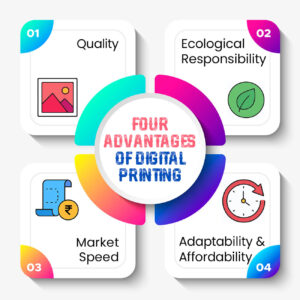
As the manufacturing sector embraces digital transformation methods to make, boost agility, and improve efficiency, it should come as no surprise that digitization has taken hold. The manufacturing landscape has changed as a result of recent events, compelling companies to reevaluate and think about how technology might enhance workflows and increase supply chain resilience. In the packaging sector, Konica Minolta has found four advantages of digital printing.

1. Quality – For short runs that require a quick turnaround without sacrificing quality, digital printing is perfect. There is no denying the significance of packaging and labeling in the manufacturing sector. Customized packaging and related product labels can stand out, boost brand awareness and loyalty, enhance market demand, and establish a personal connection with customers. Manufacturers must take into account not just the hardware but also the software and the capacity to create original apps that work together to offer better outcomes when selecting the best solution.2.

2. Ecological Responsibility– Nowadays, sustainability is a competitive advantage that can help you stand out from the competition. Customers are frequently willing to pay more for ecological products and packaging, which they are expecting more and more. Compared to traditional printing methods, digital printing has a smaller carbon footprint, requires less energy, and produces a lot less waste. Manufacturers who embrace ustainable production and lessen their environmental impact are likely to see a rise in sales, a boost to their reputation and brand, and an increase in customer trust.

3. Adaptability and affordability– Since digital printing requires almost no press setup and no printing plates, it is a cost-effective option for short runs. By lowering inventory costs and risk through on-demand printing, it also adds value for producers. Because of its adaptability, digital printing is perfect for manufacturers growing their product lines because it allows them to tailor their prints to customer demand while reducing the expenses related to SKU proliferation. Its capacity for flexibility is a major factor in producing a revenue stream that broadens current products and may open up new business opportunities.

4. Market speed– Because digital printing files are recognized by the printer instead of offset printing plates, it is more cost-effective to generate variable output and small runs. The time it takes to go from the design concept to the final product is therefore accelerated by digital printing. This eases supply chain problems, lowers overall costs, and enables businesses to react swiftly to consumer requests.

Promoting achievement in the packaging sector
Digital Printing

Digital printing is now a crucial component of company expansion and a way to set oneself apart from rivals in the consumer packaged goods sector. Given the anticipated exponential growth, the moment has come to review present procedures and leverage cutting-edge printing technology to release value that has been imprisoned. The demanding nature of the manufacturing sector is something we at Konica Minolta are aware of. We deliver exceptional flexibility, exceptional quality, and unique digital printing solutions to help manufacturers succeed in the cutthroat industrial market of today.

AccurioLabel 230 is compatible with a wide range of media including not only ordinary and matte paper, but also glossy paper, tack paper and film essential for label production. The user can not only select the ideal media to match applications but also print labels without the need for preprocessing. , the AccurioJet KM-1e, B2+ inkjet press’s production quality has improved. Skin tones, consistency of solid backdrops, and texture replication are among them, along with “best in the industry” image quality. Digital package printing, photobooks, and artbooks are a few specialized areas that the new model can be used in.


Digital printing makes it incredibly simple to invest in and diversify your business. Get in touch with the Konica Minolta team right now to take advantage of cutting-edge solutions for the packaging, label printing, and commercial markets.

Systematic Designer gets AccurioShine to add value

India, 30 May,2025: With rising demand for premium finishes like spot UV and foil — especially on items like book covers and visiting cards — the company felt the time was right to bring this technology into its portfolio Siliguri-based Systematic Designer has recently invested in a Konica Minolta AccurioShine 3600.

Sudhir Singhal, managing director, Systematic Designer, said, “Our decision to invest in the AccurioShine 3600 in January 2025 was driven by our aspiration to add value to our existing offerings through digital embellishment. We’ve long admired this machine at various expos, but Siliguri’s market wasn’t ready for it until recently. With rising demand for premium finishes like spot UV and foil — especially on items like book covers and visiting cards — we felt the time was right to bring this technology into our portfolio.”

He added, “This is our first MGI unit, and while we’re still learning the nuances of it, Konica Minolta has supported us with basic training and has committed to assisting us further in both technical training and marketing support. We recognise that this technology is a shift from our conventional work and are committed to mastering it in due course.”

Systematic Designer has a strong setup for commercial printing. In addition to three Konica Minolta production machines, including the AccurioPress C7090, AccurioPress 6120 (monochrome press), and the new AccurioShine 3600 with Foil Unit AS-101, the company operates a Heidelberg SM 74 offset press, a Heidelberg CTP system, and an extensive line-up of post-press equipment including binding and case-packing solutions. Altogether, it operates more than 20 machines at its facility, ensuring end-to-end service delivery.

Systematic Designer began its journey in 2001 in Siliguri, West Bengal. At the time, it was among the first in the region to adopt digital printing technology, starting with a Xerox digital press and a single-color offset machine. Over the years, it has evolved into a compact yet complete commercial printing solution provider, offering a range of services across digital, offset, and embellishment printing. “Our foundation lies in bringing advanced technology to Siliguri and serving diverse customer needs with quality and consistency,” Singhal said.

Systematic Designer is led by a team of three directors. Sudhir Singhal serves as the managing director, with Seema Singhal and Arup Shah.

Systematic-Designer

Singhal said, “Our client base includes educational institutions in and around Siliguri, many of whom have been associated with us for a long time. We also serve B2B clients, local businesses, and retail customers. Our commercial printing capabilities span books, periodicals, visiting cards, invitation cards, and a wide variety of paper-based printed products.”

The company currently employ around 50 professionals across various departments. The team handles everything from customer servicing and design to binding, finishing, and production.

TSinghal concluded, “The AccurioShine 3600 is still quite new to us, and we’re in the initial market education phase. Siliguri has different pricing and market dynamics compared to metro cities, so we are carefully studying how the market responds to embellished print products. We are actively promoting the technology, gathering customer feedback, and preparing ourselves for gradual adoption. While it’s too early to predict ROI with certainty, we are optimistic that with the right marketing efforts and ongoing support from Konica Minolta, the machine will begin to pay dividends both in brand differentiation and in business growth.”

Revolutionizing Packaging with Sustainable Materials and Designs

India, 29 May,2025: Packaging has shifted from a simple protective function to a core brand value statement. Today, as environmental concerns take centre stage, sustainable packaging is not only an ethical choice today, but increasingly an essential business strategy. Eco-friendly design, specialized materials, smart delivery systems and creating brand perceptions— these and other features are changing the way products get to customers, providing business opportunities for those willing to adapt to this green revolution.

Recently, the company also invested in an adhesive label die-cutting machine and slitting machine from Vinsak. It can do hot stamping, die-cutting, punching, film laminating, waste-off or slitting at one time. It is the auxiliary equipment for the AccurioLabel 230.

The Paradigm Shift in Packaging Priorities

The packaging landscape is evolving amongst the brands. What was once measured solely by durability and cost is now evaluated through a sustainability lens. The Consumer preference has witnessed a shift —today’s purchasers actively look for products from brands housed in materials that are in tune with their environmental values. A recent market survey found that about 78% of Indian consumers were willing to pay a premium for products with eco-friendly packaging.

This shift extends beyond consumer sentiment to regulatory frameworks. Plastic waste management rules, using sustainable materials and extended producer responsibility guidelines are increasingly becoming stringent across India, riveting businesses to re-examine their packaging practices — from production to disposal. Progressive businesses are transforming these challenges into opportunities, creating solutions that deliver protection, presentation, and planet.

Bio innovation: Nature-Inspired Materials Leading the Way

The sustainable packaging revolution has witnessed a remarkable innovation in biomaterials. Agricultural waste streams, once what industry viewed as scraps with no value, are now being repurposed as high-performance packaging. Rice husks, wheat straw and sugarcane bagasse are being upcycled into durable, biodegradable replacements for plastics and foams.

These bioplastics and plant-based composites come with numerous advantages: they’re derived from renewable resources, require less energy to make, and break down naturally at the end of their life cycle. What’s more, they’re becoming increasingly cost-competitive with an increase in the production. The agricultural waste-to-packaging pipeline creates a closed-loop system that benefits farmers, manufacturers, and consumers alike.

Sustainable-Materials

Design Revolution: Less Material, More Impact

Sustainable packaging excellence isn’t just about material substitution—it’s about fundamental design innovation. Minimalist principles are aiding in packaging that uses upto 25-30% less material while still protecting or even increasing protection. Such designs remove non-value-added layers, save weight, and maximize space use in the supply chain.

Smart design approaches incorporate modular systems that accommodate a variety of product sizes, eliminating void fill requirements, and packaging that transforms into useful secondary items. These approaches not only reduce waste but often improve the unboxing experience, creating memorable moments that strengthen brand connections.

Electrifying the Last Mile: Green Delivery Evolution

The sustainable packaging revolution extends beyond the package itself to how it reaches consumers. Electric vehicle (EV) delivery fleets are becoming the final critical component in truly eco-friendly product journeys. These zero-emission transport networks drastically decreased the carbon impact of every delivery and have operational advantages like cheaper fuel and less maintenance needs. In addition to the transport packaging is also becoming smart in terms of tracking the stage with the use of QR codes, RFID etc in the delivery chain. The consumers can now also track the real time status of the package.

According to companies’ deployment of EVs in the logistics networks, deliveries-related emissions can decrease by as much as 30%. This integration also delivers significant data points for sustainability reporting and creates meaningful differentiation in increasingly eco-sensitive markets. The combination of sustainable packaging and green delivery magnifies the positive environmental impact of both efforts.

The Business Case for Sustainable Packaging

What began as an environmental drive has now evolved into a compelling business strategy. According to companies with well-developed sustainable packaging initiatives, the benefits are multiple, including reduced materials costs, lower shipping weights, greater consumer loyalty and improved perceptions of the brand.

Research showcases that products featuring clear sustainable packaging messaging have up to 78% greater engagement. Companies who are taking the lead on packaging sustainability are achieving an upper edge in market share and gaining resilience to future regulatory pressures. This proactive strategy is especially important in India, where the pace of urbanization and rising environmental consciousness are fuelling a perfect storm of opportunity for sustainable innovations.

Tomorrow’s Packaging Today

The future of packaging is arriving faster than anticipated. Developments in materials science, digital print technologies, and supply chain efficiencies are rapidly driving the shift to fully sustainable solutions. Companies that look at packaging from a sustainability perspective are not only decreasing their carbon footprint but have also witnessed themselves at the vanguard of an industry revolution that will reshape how products are safeguarded, displayed, and delivered.

In this new paradigm of packaging, business success and environmental stewardship are not in conflict—they’re complementary drivers propelling innovation towards a more sustainable future.

Konica Minolta Initiatives towards sustainable packaging

Konica Minolta, a global leader in Digital Printing technologies brings products and services to help brands & printers towards contributing to the sustainability goals. Digital printing technologies help to produce the required quantities with customisation and personalisation thereby reducing waste and time to delivery. Using Digital Printing the brands can embed features like Bar Codes, QR Codes to enable track and trace for track and trace in addition to authenticating the genuineness of the packaged materials. Konica Minolta brings inkjet and laser printing products for printing and also workflow automation software’s to improve the process efficiencies thereby reducing the waste and saving time for all.

Hopuz Printers and Packagers buys AccurioLabel

-The new investment will help the company print short-run label jobs.

India, 23 May,2025: Malappuram, Kerala-based Hopuz Printers and Packagers recently invested in a Konica Minolta’s Accurio Label 230.

Recently, the company also invested in an adhesive label die-cutting machine and slitting machine from Vinsak. It can do hot stamping, die-cutting, punching, film laminating, waste-off or slitting at one time. It is the auxiliary equipment for the AccurioLabel 230.

Hopuz-Printers

Established in 2007, Hopuz Printers and Packagers provides comprehensive printing and packaging solutions. The company has gained a reputation for delivering high-quality offset printing services and handling diverse assignments while maintaining exceptional standards. Dedicated to innovation, Hopuz Printers and Packagers continuously invests in advanced equipment to meet the evolving market demands. By expanding its product range and prioritising speed of delivery, the company effectively caters to clients from various market segments, ensuring customer satisfaction.

Hopuz Printers and Packagers is a partnership firm consisting of three partners — Muneer C; Jashith E; and Hassan KC.

The company’s principal clientele includes companies such as Easy Pack, Malabar Equipments and General Traders; Ideal Cartons; KCM Appliances, Libro Bond; Insight Publica Printers and Publishers, Capital International Books and others. It cater to a wide range of paper printing needs, from notices and booklets to industrial-level printing for packaging, duplex board printing, and magazines.

“We are expecting the return of full investment and 30% profit within three years of installation,” Muneer C concluded.

Konica Minolta’s production printers & printed samples at Bharat Print Expo

-Print’s future lies in hybrid systems -Konica Minolta’s Manish Gupta.

India, 14 May,2025: At the recently concluded Bharat Print Expo 2025 in Bengaluru, Konica Minolta demonstrated two of its production printing systems-the AccurioPrint C4065 and AccurioPrint 2100. The company also showcased print samples that used embellishment and label technologies, specifically on the AccurioLabel 230 and AccurioShine 3600.

“The centerpiece of our stand was the live demo area, where visitors saw for themselves the superior print quality, substrate handling, and workflow automation strengths of both models on display. We presented the strengths of our systems for mid-volume commercial printers, schools, and in-house print departments of corporates,” Manish Gupta, head of product lifecycle management and planning, Konica Minolta, said.

“Visitors were attracted by the tactile embellishments samples and high-resolution labels on display, which featured Konica Minolta’s growing list of specialty applications and value-added printing,” Gupta said.

Bharat-Print-Expo

According to Gupta, the high-volume performance, extensive media handling, professional print quality, and versatile finishing solutions reduce training time and optimize operational effectiveness, particularly valuable in today’s market where the availability of skilled operators can be limited.

Konica Minolta has more than a 50% market share in India’s production printing market, Gupta said. “We have registered growth consistently in the commercial print, educational, and corporate segments, with successful penetration in metro
and tier-2 cities, indicating the growth of the digital print market across India.”

A major theme that emerged during the interaction was the digital transformation of the printing industry. As print service providers face increasing demand for short-run, on-demand, and highly customized jobs, they are looking for flexible, automated, and intelligent solutions. “India’s printing industry is at a tipping point in its digital evolution. Technologies such as digital embellishment, hybrid workflows, and AI-driven quality optimization are no longer just trends – they are becoming necessities,” Gupta emphasized.

Gupta believes that the future of print lies in hybrid systems that combine the strengths of both digital and traditional technologies. “We foresee strong demand for hybrid solutions that offer both the agility of digital and the robustness of conventional workflows. Additionally, sustainability, automation, and AI-based color calibration are setting new benchmarks for print quality and operational efficiency,” he noted.

A diverse mix of commercial printers, corporate buyers, educational institutions, and SMEs visited Konica Minolta’s stand. “There was a noticeable interest in our mid-range production systems due to their affordability and performance balance,” Gupta said.

“Although individual deal closures remain in a finalization stage, we have established multiple leads and expressions of interest, such as long-term partnership inquiries, bulk installation requests, and accessory purchases. Multiple leads were created, and preliminary discussions for machine installation are already in progress,” he said.

Konica Minolta India recognized amongst Most Trusted Brands 2025

-The company receives the award for the second year in a row.

India, 06 May,2025: Konica Minolta Business Solutions India has received the Most Trusted Brands 2025 recognition for the second consecutive year. The recognition was extended at the Trust Summit 2025, organized by Team Marksmen at the Taj Palace in New Delhi.

The accolade honors Konica for its ongoing excellence in cultivating consumer trust through transparency, authenticity, and alignment of its actions with its stated values. This recognition, developed by Team Marksmen, celebrates brands that effectively utilize trust as a cornerstone for sustainable growth and market leadership.

We are privileged to be awarded the Most Trusted Brands in 2025 honor for the second year. In the rapidly changing business landscape, trust has become a crucial differentiator. This recognition showcases our steadfast dedication to nurturing transparent relationships with our stakeholders,’ said Katsuhisa Asari, managing director at Konica Minolta Business Solutions India. ‘At Konica Minolta, we are convinced that consistently delivering on our commitments and upholding authenticity across all our interactions has been key to establishing enduring trust with our customers.

Technology-accelerates

Trust has become a crucial aspect of Konica Minolta’s business strategy as consumer expectations change in the digital era. The company has launched several initiatives to improve operational transparency, ensure uniform quality across all products and services, and promote open stakeholder conversations. These actions have immensely strengthened the emotional bond between the brand and its varied customer base.

The Trust Summit 2025 gathered industry leaders and visionaries from all over India to discuss trust’s significance as an essential business element. The event included thought-provoking panel discussions and keynote speeches that examined how organizations can harness trust to foster growth and resilience in a more complicated marketplace.

As Konica Minolta India commemorates this milestone, it reaffirms its dedication to upholding and enhancing the standard of excellence that customers have come to anticipate.

Print Technology accelerates digital growth with Konica Minolta AccurioPress investment

-Pune-based firm enhances production speed and quality as part of its long-term digital print strategy.

India, 28 April,2025: Print Technology, a commercial print firm based in Pune, has strengthened its production capabilities with the addition of a Konica Minolta AccurioPress C7090 to its digital press lineup. The investment reinforces the company’s longstanding relationship with the Japanese print equipment manufacturer and marks a strategic move to increase efficiency and reduce turnaround times.

Founded in 2015, Print Technology operates with a lean team of 8 to 10 professionals and serves a balanced portfolio of supply chain and retail clients. The firm offers a range of commercial print services, including brochures, booklets, and visiting cards. Vash Ram Ahir, who oversees operations and customer engagement, explained that the company has consistently relied on Konica Minolta since its inception. “We began our journey with Konica Minolta and have stuck with them because of the consistency and reliability of their machines,” said Ahir.

The decision to invest in the AccurioPress C7090 followed Print Technology’s experience with earlier models such as the Pro 1100 and the AccurioPress C4080. The company previously ran the C2060, which was phased out as the equipment aged. The C7090 has already begun to show results, with improvements in turnaround time and operational throughput. “The machine has helped us process increased volumes without compromising quality,” Ahir noted.

Technology-accelerates

Installation and setup were handled with support from the Konica Minolta team, though Ahir said the process was largely straightforward due to the firm’s familiarity with the platform. “We’ve used their machines for years, so it was a smooth transition. Still, their support ensured that everything went as planned,” he added.

While Print Technology did not disclose the exact return-on-investment figures, however, Ahir is optimistic about the investment’s impact, noting early signs of improved productivity. “The enhanced productivity and speed will contribute significantly to our growth trajectory.”

How customised packaging propels customer loyalty and revenue growth

-The correct graphics, made with the right colours and the right intentions, develops connections with consumers functioning as a critical revenue driver beyond a protective necessity, Ashok Sethi, chief sales office, Konica Minolta India.

India, 25 April,2024 Product differentiation is the currency of attention that extends far beyond the product itself. Customised packaging is the quickest way to leave a lasting psychological and emotional impact. The correct graphics, made with the right colours and the right intentions, develop connections with consumers functioning as a critical revenue driver beyond a protective necessity. Here is how customized packaging can create exceptional customer experiences through four key mechanisms.

The psychological power of first impressions

First impressions fundamentally shape consumer perceptions, with research confirming that packaging creates critical initial brand judgments. Packaging design directly influences customer attention, better recognition, purchase likelihood, brand choice, and financial performance.

This “halo effect” speaks volumes of product quality before consumers experience the actual product. This is verified by strategic packaging elements, including colour psychology, tactile components, and personalized elements that trigger neurological responses to elevate perceived value. The impact is particularly evident in premium market segments.

Brands implementing personalisation elements report up to 40% increases in customer revenue demonstrating that customization creates a powerful sense of exclusivity and individual recognition. This connection is an underutilized competitive advantage for brands seeking differentiation in saturated markets.

Emotional engagement through unboxing experiences

Today, the unboxing experience is the product, given that packaging carries the motherload of brand storytelling and emotional connection.

Beyond aesthetics, packaging activates sensory appeal via its texture, weight and other elements reinforcing brand perception at a subconscious level. A well-crafted unboxing experience cultivates a sense of exclusivity and personal connection, making customers feel valued and understood.

This emotional response is a monetisation goldmine, that promises increased social media sharing and strengthened retention metrics. Over the course of product launches, emotionally engaged customers demonstrate higher lifetime value via stronger brand advocacy and a greater willingness to pay premium prices.

Here lies a substantial return on packaging investments when properly aligned with brand positioning and customer expectations. The proliferation of unboxing content across digital platforms further amplifies this impact, with increase in unboxing video viewership across video streaming and social media platforms. Each shared experience extends brand reach exponentially, creating organic marketing amplification through customer-centric activation points, all initiated by strategic packaging decisions.

Small business competitive advantage

Historically, enterprise brands led packaging innovation, but digitalisation and manufacturing advancements have levelled the playing field. Now, small and mid-sized businesses can use custom packaging to stand out against larger competitors with bigger marketing budgets.

The financial implications are substantial. When implemented strategically, custom packaging initiatives generate positive ROI through multiple channels including an increase in word-of-mouth referrals, which research identifies as particularly valuable for businesses with constrained marketing budgets.

Additionally, distinctive packaging provides critical visual differentiation in crowded digital and physical retail environments, enabling smaller brands to compete effectively against established market leaders. The strategic advantage extends beyond aesthetics as custom packaging enables protection tailored specifically to product requirements, reducing damage-related returns and associated operational costs.

Sustainability integration as revenue driver

intersection of customised packaging and sustainability initiatives represents a particularly potent opportunity. About 85% of consumers have adopted more sustainable behaviours and 45% expect sustainability as a given. This consumer demand creates both risk and opportunity, with customised approaches enabling brands to integrate recycled materials, biodegradable components, and innovative reusable designs that align with evolving consumer expectations.

Contrary to conventional assumptions, sustainable customised packaging often delivers superior financial performance. Companies implementing eco-friendly packaging solutions report enhanced customer perception, increased willingness to pay premium pricing, and strengthened retention metrics. Sustainability-focused packaging innovations generate particular resonance with environmentally conscious market segments, creating a virtuous cycle where environmental and financial objectives align.

While initial expenses for customized sustainable packaging typically exceed standard options, the investment generates tangible returns through enhanced brand value perception, reduced customer acquisition costs, and increased repeat purchase behaviour. Comprehensive lifecycle assessments and consumer survey data confirm that these sustainability initiatives transform packaging from a commodity expense into a strategic revenue driver

Packaging dictates end-user purchase

Beyond aesthetics, packaging serves as a silent salesperson that ushers the final sway of sell or pass. By creating psychological connections, facilitating emotional engagement, enabling competitive differentiation, and integrating sustainability priorities, brands can transform packaging into a central component of customer experience management and revenue acceleration.

The most successful implementations approach packaging holistically integrating design, materials, functionality, and sustainability to create experiences that extend far beyond product delivery. As markets evolve, companies prioritizing packaging innovation will increasingly capture disproportionate market share through enhanced customer loyalty and accelerated revenue growth.

The Future of Print: Personalized Experiences Drive Engagement

India, 19 April,2025: Over the years the printing industry has witnessed personalization as the key to connect with the customers. Traditional printing has evolved from mass produced generic materials with digital printing technologies bringing in customised experiences that resonates completely with individual consumers and creating new sources of revenue for printers.

The Personalization Revolution

The printing industry has transitioned whereby customers now expect content that is tailored basis their personalized and unique preferences and needs. In the overcrowded media landscape, generic marketing has failed to capture the attention of the target audience. Digital printing technologies, mainly Variable Data Printing (VDP), enables businesses to create highly customized content where each printed piece can feature different text, images, colours, and layouts without impacting the production ability.

Printers using VDP solutions can provide their customers very effective direct mail campaigns, customized catalogues, labels, personalized packaging, and targeted promotional materials that have increased response rates and ROI for end customers.

Web-to-Print: Revolutionizing Order Management

Web-to-Print (W2P) solutions have transformed the way printers engage with customers, making print orders more efficient while increasing personalization features. W2P systems enable print suppliers to create branded web-based storefronts where customers can personalize templates, upload their designs, and order 24/7.

Advanced W2P systems interface with production workflows and automate job ticketing, preflighting, imposition, and other pre-press operations. This automation minimizes touch points, eliminates errors, and quickens turnaround times for customized print jobs.

For printers, W2P offers the possibility of creating several storefronts serving various vertical markets, with targeted product options and pricing levels. The technology also supports print-on-demand functionality, allowing low-cost short runs of personalized content while avoiding inventory obsolescence.

Colour Management in Personalized Production

Maintaining colour consistency over different substrates and print runs is important in personalized printing. Contemporary colour management systems guarantee that brand colours are consistent when printing one item or thousands of different variations.

Printers using strong colour management processes can ensure brand consistency between various print technologies and substrates. This consistency is especially important when customers deploy cross-media campaigns where printed pieces must be identical to digital assets.

Advanced spectrophotometric equipment and colour-profiling software allow print providers to hold close tolerances even where personalization demands blending offset, digital, and wide-format output for overall campaigns.

Automation of Workflow for Customized Production

Automated workflow solutions are now critical to controlling the complexity of personalized print production. Automated workflow solutions route and manage personalized jobs through prepress, production, finishing, and fulfillment while preserving data integrity during the process.

Smart manufacturing workflows can divide up customized jobs automatically by substrate, format, or finishing needs, sending parts out to the correct digital presses while creating tracking barcodes that enable automated finishing and assembly. It is this kind of automation that makes it economically feasible for printers to work with thousands of unique pieces.

Experiences-Drive-Engagement

The use of management information systems (MIS) integrated into production workflows supports precise job costing and scheduling of customized work so that print service providers can retain profitability while selling highly customized items.

Commercial Applications Across Markets

Personalization will create new opportunities for printers in several different applications:

  • Retail packaging with personalised graphics and custom messaging enable augmented reality experiences to come alive via QR codes.
  • Corporate communication materials that have variable content according to which role and location the recipient comes from as well as what past interactions they may have had
  • Combination of transactional information with tailored promotional content in trans-promotional statements
  • Short-run books with customized covers, content, or editions
  • Personalized direct mail campaigns with variable images, offers, and personalized URLs
  • Event materials containing attendee-specific information, agendas, and personalized follow-up components.
  • Personalised Spot UV and personalised Foil using digital process adds the eye catching impactful features to the same document and make it more appealing.

Looking Forward

Konica Minolta provides the workflow automation software’s under the umbrella of Accurio Pro series to support the printers to manage the above challenges. Addition of the workflow automation is a step towards improving efficiency and reducing the errors. The software’s also provide critical metrices for the performance of the processes and the same can be analysed for further improvement.

The future of business print is where personalization, automated processes, and innovative technologies meet. With the development of AI capabilities, we can anticipate even more advanced personalization that foresees customer needs through predictive analytics.

For printers, the investment in these technologies means potential to transition from commodity print suppliers to marketing services providers who produce high-value personalized communications. By designing unique, relevant experiences for end consumers, personalized print doesn’t merely coexist with a digital age—it prospers by providing something that digital cannot: a physical, personal touch that touches more than one sense and creates long-term memories while delivering tangible business outcomes.

Erica Digital bets on Konica Minolta to scale printing ambitions

-Pune’s Erica Digital has ramped up its digital printing prowess with a Konica Minolta AccurioPress C12000, a strategic investment to boost capacity and quality as it eyes growth in India’s competitive print market.

India, 17 April,2024 Erica Digital has doubled down on its growth strategy with a fresh investment in Konica Minolta’s AccurioPress C12000.

Launched in 2020 amid the upheaval of the Covid-19 pandemic, the firm has carved out a niche serving designers, creative agencies, and retailers with tailored print solutions. This latest move signals its intent to capture a larger slice of a market increasingly driven by demand for high-quality, bespoke printing.

Under Vinod Vaviya’s ownership, Erica Digital has built its reputation on agility and precision. Its five-person team, trained to handle complex pre-press and post-press tasks, produces everything from brochures and visiting cards to stickers and booklets.

Erica-Digital

The acquisition of the C12000, which joins an existing AccurioPress C6085, enhances the firm’s ability to manage high-volume orders without compromising quality. “We chose Konica Minolta for its reliable, high-speed machines that ensure consistent output,” said Vaviya. “The C12000’s speed and flexibility have made it a cornerstone of our operations.”

The partnership with Konica Minolta, which began at the firm’s inception, has been pivotal. The Japanese manufacturer provided extensive training and ongoing support, enabling Erica Digital to integrate the new equipment seamlessly. “Konica Minolta’s team ensured a smooth process from installation to daily operations, helping us extract maximum value from the machines,” Vaviya noted. “The C12000, installed a year ago, has delivered steady returns, particularly in image quality and operational efficiency, though the C6085 initially outperformed it in the early months.”

With plans to add another Konica Minolta press, the firm is poised to expand its reach.

India’s digital printing sector, valued at roughly INR 271-billion in 2024, is growing as businesses demand personalised marketing materials. Erica Digital’s investment aligns with this trend, positioning it to serve new client segments while maintaining its lean, responsive model. The C12000’s ability to handle diverse print jobs has already bolstered the firm’s output, and Vaviya is optimistic about future gains. “We expect even stronger returns as we scale and tap into new markets,” he said. For now, Erica Digital’s calculated bet on technology and training underscores its resolve to thrive in a competitive landscape.