





Konica Minolta India: Enabling Digital Transformation
-Mr. Katsuhisa Asari, Managing Director, Konica Minolta India, in an exclusive interview with PRESSIdeas, speaks in detail about the evolving digital printing landscape, Konica Minolta as an enabler and the driving forces of the Indian print industry.
India, 24 March,2026: Konica Minolta has consistently positioned itself as a technology pioneer in the digital printing space by focusing on innovation, reliability, and customer-centric solutions. In India, the company plays a significant role in accelerating the growth of digital production by offering advanced print technologies, intelligent workflow automation, and high-quality production systems that help businesses improve efficiency and expand into value-added applications. What differentiates Konica Minolta from many other players is its end-to-end ecosystem approach combining cutting-edge production engines, automated colour and quality management, workflow solutions, and strong service support.
“Rather than simply supplying equipment, the company works closely with customers to enable digital transformation, helping them move towards high-mix, short-run production, personalised print, and premium applications such as labels and embellishment,” introduces Mr. Katsuhisa Asari, Managing Director, Konica Minolta Business Solutions Pvt. Ltd. India. With a focus to support the customer in the entire document production cycle from Prepress – Print -Post Press, the holistic approach has helped Konica Minolta build strong customer trust and maintain a competitive edge in the evolving digital printing landscape.
Expounding on the fast evolving graphic industry and the latest trends shaping it, Mr. Katsuhisa Asari says, “The fast-evolving graphic industry is being driven by digitisation, automation, sustainability, and personalisation. Digital printing is accelerating as brands demand shorter runs, faster turnaround, and variable data capabilities. Automated, cloud-enabled workflows are improving efficiency and reducing manual intervention, while sustainability is pushing the adoption of low-waste, energy-efficient technologies. Customisation and on-demand production, especially in packaging and marketing collateral, are also gaining strong momentum. Looking ahead, digitisation and automation will remain foundational as print businesses modernise and scale. Sustainability will continue shaping investment decisions, and personalisation will expand as brands seek deeper consumer engagement. These trends are collectively redefining the industry to be more agile, efficient, and future-ready.”
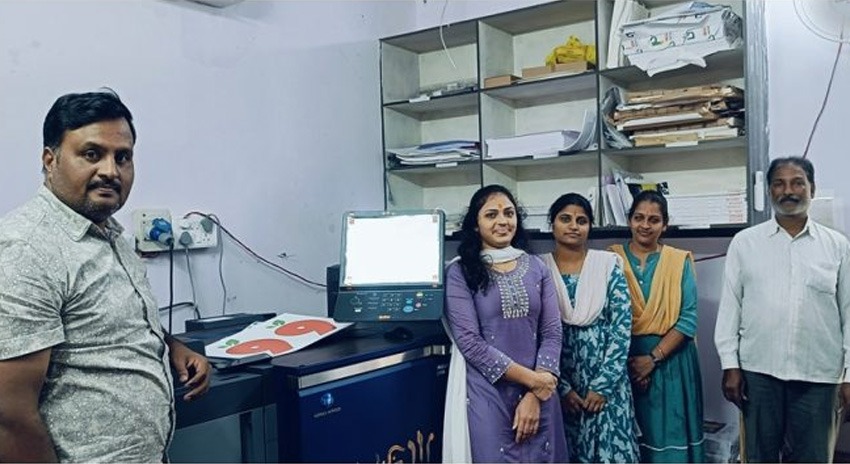
“Konica Minolta’s focus has always been to bring new products and solutions to enhance the productivity and ease of operations for the customers to increase the overall productivity in the document print cycle,” he states.
With Digital Production Printing market in India growing in double digits, we see it accelerating its shift toward digitisation – enabling shorter runs, faster turnaround times, mass customization, and more sustainable production. “Businesses are transitioning from analogue-heavy setups to integrated digital workflows that minimise waste and support variable data printing. Automation, cloud-enabled workflow management, and intelligent quality control are further streamlining operations, improving efficiency, and addressing skill gaps across commercial print and packaging segments,” says Mr. Katsuhisa Asari.
“At Konica Minolta, we support this transformation through advanced digital production systems and integrated workflow solutions under Accurio Pro umbrella that automate job management, colour consistency, and pre-press processes, creating a seamless end-to-end digital ecosystem. Together, these technologies empower print businesses to enhance agility, productivity, and profitability in an increasingly digital-first landscape,” he enlightens.
How a Konica Minolta customer is better equipped to tap the emerging trends in the professional printing space is a clear story of capability of the company’s technological portfolio. “A Konica Minolta customer is better equipped to tap emerging trends in professional printing because the company’s portfolio is built around digital transformation, automation, and value-added production,” underlines Mr. Katsuhisa. “As the industry shifts from traditional offset to digital for shorter runs, personalisation, and faster turnaround, Konica Minolta’s advanced toner and high-speed inkjet platforms enable printers to respond with agility while maintaining consistent, high-quality output. Integrated workflow solutions and automation tools further streamline pre-press to post-press processes, reducing manual intervention, improving efficiency, and addressing skill gaps, allowing print businesses to scale sustainably and profitably,” he continues.
In the printing and packaging space specifically, key technologies such as digital label presses, industrial inkjet systems, embellishment solutions, and intelligent colour management are defining the next phase of growth. With increasing demand for customised packaging, regulatory-compliant labels, and sustainable production, Konica Minolta solutions support shorter production cycles, reduced waste, and variable data printing capabilities, says Mr. Katsuhisa.
“The future trend is to enable and broaden the horizon for the printers to offer multiple services to the end customers. The focus is to add more value for the customers by increasing the automation saving time and reducing errors or wastage and increasing the efficiency of the entire process ultimately leading to higher profits for their organisations. We also bring the solutions for Digital Spot UV and Digital Foil to add value and sell the same document with much higher profitability,” further highlights Mr. Asari.
Konica Minolta technologies – transforming the printing and packaging industries
By enabling a shift to value-driven digital manufacturing, Konica Minolta’s technologies are transforming the printing and packaging industries today. Advanced digital presses and industrial inkjet systems support short-run, high-quality, and variable data printing, allowing converters and print service providers to respond quickly to market demands for customization, faster turnaround, and premium finishes. “This is particularly impactful in packaging and labels, where brand differentiation and regulatory compliance require flexibility and precision,” asserts Mr. Katsuhisa. Beyond hardware, Konica Minolta integrates intelligent workflow automation, colour management, and data-driven quality control to create a connected, end-to-end production ecosystem. These solutions reduce waste, improve operational efficiency, and support sustainable practices, helping businesses optimise costs while enhancing output consistency. “By combining digital production with smart software, Konica Minolta is enabling printers and packaging converters to become more competitive, scalable, and future-ready,” he corroborates.
The year 2025 has been a significant and milestone year for Konica Minolta, marked by strong technological progress, industry recognition, and continued market momentum in India. The company strengthened its leadership in digital printing, workflow automation, and office solutions, while its innovation-driven portfolio continued to gain traction across commercial print, enterprise printing, and digital workplace segments.
“In India, the number of machines from Konica Minolta is growing in double digit and the future trends are also positive for the Digital Print Industry,” updates Mr. Katsuhisa.
Green innovations addressing sustainability in printing and key challenges
At Konica Minolta India, sustainability is embedded into operations through structured compliance and proactive initiatives. The company has effectively implemented the E-Waste (Management) Rules and operates a PAN-India e-waste collection mechanism in partnership with authorised recyclers. With registered EPR (Extended Producer Responsibility) certifications for plastic and battery waste management, over 25+ collection centres across India, RoHS compliance, and internal awareness programmes, Konica Minolta ensures responsible recycling without landfill disposal. This reflects a long-term commitment not only to green technologies in printing, but also to circular economy practices and environmental stewardship across the entire product lifecycle.
“The uptake of eco-friendly practices in the printing industry is steadily increasing, driven by regulatory guidelines, brands’ commitment, and rising environmental awareness,” observes Mr. Katsuhisa.
Digital production, energy-efficient systems, and waste reduction through on-demand printing are becoming standard priorities. However, key challenges include higher upfront investment, limited awareness among some players, and the need for stronger recycling and end-of-life infrastructure. Konica Minolta addresses these through energy-efficient digital technologies, intelligent automation that reduces waste, and structured sustainability initiatives.
The growth prospects of sustainability in the Indian printing industry are very strong. These are chiefly driven by increasing environmental awareness, regulatory push, and brand demand for greener supply chains. “Print service providers are gradually adopting eco-friendly practices such as recycled paper, energy-efficient printing systems, and waste-reduction processes. Sustainability is also being accelerated by the rise of digital printing, which enables on-demand production and significantly reduces material wastage,” emphasises Mr. Asari.
The Indian market presents significant growth opportunities across digital commercial print, labels & packaging, and workflow automation as businesses increasingly adopt digital technologies for short-run jobs, customisation, and faster turnaround times. Demand for premium packaging, digital labels, and embellishment applications is rising rapidly as brands seek differentiation and higher value workflows. Additionally, there is growing uptake of cloud-enabled services, managed print services, and sustainable solutions as enterprises streamline operations and improve efficiency. Speaking about Konica Minolta’s expansion strategy in India, Mr. Katsuhisa Asari says that the expansion strategy is aligned with these opportunity areas. The company continues to strengthen its digital print and production portfolio. “There is a growing demand for the short run applications especially to support short packaging and small quantities of labels. We see this trend growing from bigger cities to smaller cities,” he says.
Key areas of user education
Mr. Katsuhisa recognizes the key areas of user education in the printing and digital workflow space as digital transformation & automation, colour management best practices, sustainable production methods, and value-added applications like labels and embellishment. “Customers increasingly need guidance on how to adapt from traditional analogue setups to integrated digital workflows, optimise job throughput with intelligent automation, and deliver consistent quality across diverse applications from commercial print to packaging and personalised print products,” says Mr. Asari, adding, “Konica Minolta supports this through a range of training programmes, workshops, online learning resources, and hands-on demonstrations for customers and operators. The company provides step-by-step training modules and video learning libraries that help users understand device capabilities, finishing techniques, and workflow solutions at their own pace.”
The successful PrintXpress campaign
We all know about Konica Minolta’s successful PrintXpress campaign in India. “The company is building on the strong momentum of the PrintXpress campaign,” says Mr. Katsuhisa Asari. “The campaign has become a benchmark outreach initiative by bringing advanced digital production technologies closer to emerging print markets and bridging key technology gaps for small and mid-sized businesses. Its success lies in its scale, accessibility, and ability to drive customer education, strengthen partner networks, and unlock new growth opportunities,” he says.
“Building on this, the ‘India Prints on Konica Minolta’ campaign further reinforces the brand’s commitment to empowering businesses, deepening industry engagement, and enabling growth through technology and innovation.”
Konica Minolta and the year ahead
By the end of 2026, Konica Minolta aims to further strengthen its position in India as a leading provider of digital printing, workflow automation, and intelligent workplace solutions. The company will continue focusing on driving digital transformation for customers by enabling more efficient, automated, and data-driven print environments that support evolving business needs across commercial print, packaging, and enterprise segments.
“In the coming year, we plan to deepen our presence in high-growth areas such as digital production printing, labels and packaging, workflow automation, and managed print services. We will also continue investing in customer engagement, technology innovation, and service capabilities across India. By expanding solutions ecosystem and strengthening partnerships with print businesses and enterprises, Konica Minolta aims to support customers in improving productivity, embracing new applications, and unlocking new growth opportunities in an increasingly digital-first market,” declares Mr. Katsuhisa.
‘Digital’ being overused?
We see a lot of players entering the digital space. We often see the word digital as overexploited by many new players. Exploring the development, Mr. Katsuhisa says, “The term “digital” is often used very broadly today, which can sometimes blur the distinction between true digital printing technologies and conventional systems that simply incorporate digital controls or automation. While many traditional printing platforms may be supported by digital workflows or software tools, true digital printing is defined by its core imaging process.”
Further explaining, he says, “At Konica Minolta, digital production print systems are designed around this complete ecosystem. Our colour and monochrome production presses combine high image quality, high-speed output, variable data capability, and integrated workflow automation to deliver consistent results while improving productivity and reducing waste. This end-to-end approach from workflow to finishing ensures that digital printing goes beyond just technology integration and truly transforms print operations.”
AI – a transforming enabler in printing and its practical significance for printers
AI is already becoming practically relevant in printing through applications like automated colour calibration, intelligent quality optimisation, predictive maintenance, and workflow automation. These tools help reduce waste, improve consistency, and minimise downtime, delivering immediate operational benefits. ‘For Indian printers, AI adoption will accelerate as competition increases. In the near future, AI-driven automation will move from being an advantage to a necessity, especially in high-mix, short-run, and value-added print environments,” envisages Mr. Katsuhisa.
Mr. Katsuhisa concludes with a candid suggestion to printers, “Our suggestion to all the printers is to look at Digital Printing differently. It helps in opening new doors and also helps in retaining the customers. Long jobs can continue on traditional process and short run jobs can be done on Digital. Additionally the customer is not exposed to other print service providers and it helps in retaining the relationship with the customers.”